
When Ron Davis was a child in 1949, he sat in a corner of his classroom wearing a handkerchief on his head—a mark of shame. He couldn’t read. Teachers called him names. He had no idea that his “broken” brain would later unlock the very gift that was causing his suffering.
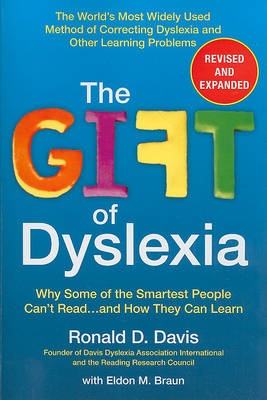
At 38, Davis made a discovery about his own perception that let him read a full book for the first time. He then spent decades developing techniques to help others harness the same mental abilities. The Gift of Dyslexia, first published in 1994, became a global bestseller because it offered a radical reframing: dyslexia isn’t a disability to overcome. It’s a talent that creates problems when it collides with written language.
Here’s the point most people miss: the genius doesn’t happen in spite of dyslexia. It happens because of it.
All dyslexics share eight core abilities:
🟣 They can alter and create perceptions—the primary ability underlying everything else
🟣 They’re highly aware of their environment
🟣 They’re more curious than average
🟣 They think mainly in pictures, not words
🟣 They’re intuitive and insightful
🟣 They perceive multi-dimensionally, using all their senses
🟣 They experience thought as reality
🟣 They have vivid imaginations
Albert Einstein, Walt Disney, and Greg Louganis all had dyslexia. Their genius emerged from the exact same mental functions that made reading difficult. When these abilities go unvalidated or suppressed, dyslexics often hide their gifts and adopt workarounds. When they’re recognized and developed, they produce something Davis calls the gift of mastery—the ability to understand something so deeply, experientially, that you know how to do it intuitively.
Davis explains dyslexia as “the Mother of Learning Disabilities.” It shares a root cause with ADD/ADHD, autism, dyscalculia, dysgraphia, and hyperactivity. Each case is unique because dyslexia results from a combination of an underlying talent and environmental influences—particularly the stress and invalidation that happen during early school years.
Here’s how it works: dyslexic children are visual thinkers who excel at recognizing real objects. Their brains process multi-dimensional thinking faster than verbal thinking. But when they encounter printed symbols—letters and words—their talent becomes a liability. The symbols confuse them because the child’s brain tries to apply real-world visual perception to abstract marks on a page.
Disorientation triggers when confusion sets in. The stress of repeated failure compounds it. Over time, many dyslexics adopt mental tricks to hide their disability, damaging their self-esteem in the process.
The revised and expanded edition of The Gift of Dyslexia includes updated methods for addressing the problem while preserving the gift. Davis details three concrete techniques:
Davis Orientation Counseling teaches dyslexics to turn off disorientation and refocus their perceptions. Two simple mental exercises allow them to overcome distorted perception and accurately recognize printed symbols.
Davis Symbol Mastery uses a stress-free, multi-sensory approach. Students model symbols and word concepts in clay—engaging their creativity while building accurate visual word recognition.
Davis Reading Exercises are three simple daily practices that improve reading fluency and comprehension.
The point isn’t to “fix” the dyslexic mind. It’s to teach dyslexics how their minds work and give them tools to use their talent without the distortion.
If you’re a parent of a dyslexic child, you’ll find practical guidance and something more important: perspective. Your child isn’t broken. Their brain works the way Einstein’s did.
Teachers and facilitators gain insight into how dyslexic students actually think—not as a deficit model, but as a different processing style with real strengths.
Adults with dyslexia often report that this book validates their experience and explains struggles they never understood. Many discover they’ve been using the positive side of dyslexia in their work all along without realizing it.
And anyone who works with dyslexic individuals—whether as a supporter, educator, or therapist—benefits from Davis’ perspective. It shifts you from seeing a problem to seeing a talent that needs direction.
Download: 5 Common Myths About Dyslexia — Before diving into the book, grab this free sheet. It clears up the misunderstandings that keep people stuck: dyslexia isn’t just about letter reversals, trying harder won’t fix it, and it’s not a lifelong disability to be managed. Understanding these myths shifts how you see dyslexia—and opens the door to seeing it as a gift.
Buy The Gift of Dyslexia Now — Available in paperback or listen to the audiobook on Audible.
ISBN: 978-0399535666
Publisher: Perigee Books, 2010
Author: Ronald D. Davis with Eldon M. Braun