Geen onderdeel van een categorie
His mother was told he would never speak, learn or achieve anything beyond what a chimpanzee could. That man went on to revolutionize the way we look at neurodivergence.
Ronald Dell Davis, pioneer in neurodivergent thinking, died on August 28, 2026, aged 84.
The Davis community are marking his life with memorial services being held around the world, in many different languages. Ron was autistic and dyslexic, he created the Davis Method to help others like him: neurodivergent individuals struggling in a neurotypical world. The Davis Method has helped over 80,000 families worldwide, is available in 20 languages and there are now over 300 Davis Facilitators around the world.
In the early years, Ron’s methods were criticized because they existed in a time before the word “neurodiversity” was coined (1998), before “neuro-affirming” was a concept and because he wasn’t an academic – what could someone that couldn’t speak until he was 12 or read or write until he was 38, possibly know about these things?
Luckily, some other pioneers joined him and now we now carry his work forward through a global network of Davis Facilitators, teaching Ron’s life work.
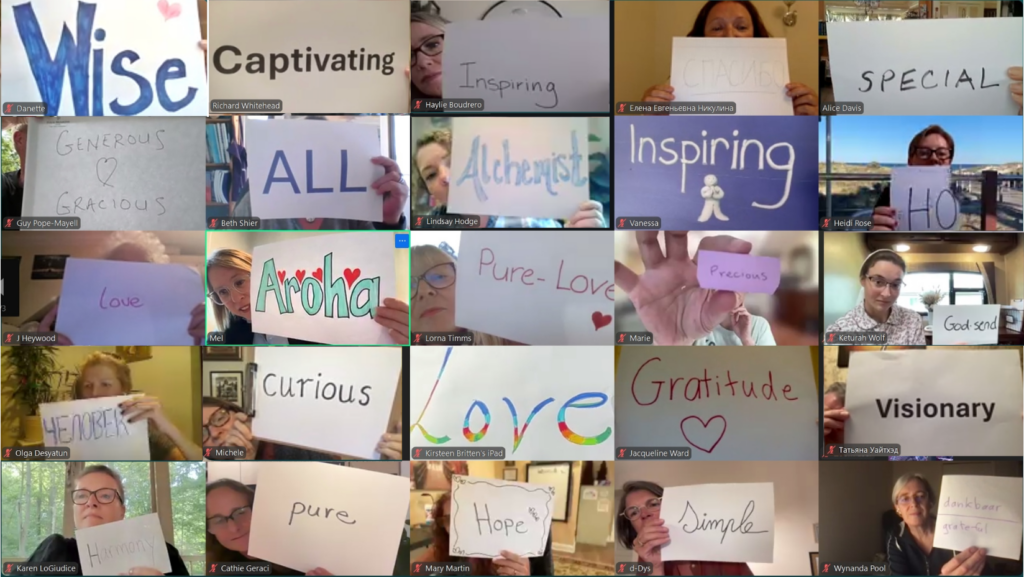
Ron was born in 1942 and labelled a Kanner’s baby (early term for autism coined by Doctor Leo Kanner).
Before age 12, Ron had very little verbal communication or memory. From Ron’s account of his early childhood, he has no recollection of his early years, he had no awareness of being alive and no connection to others or himself. From deep in the void of autism, something, somehow, woke him to the world.
A peek inside a neurodivergent brain
In Ron’s autobiography, Dummy, he outlines how his brain works. There are no words or sentences inside his head. It’s colors, shapes, moving images. Imagine when people speak to you, you don’t hear the words, you see swirling colors and images. Ron could only understand the colors if they formed a picture of a concept he understood. If there was no picture for the words spoken to him, he couldn’t understand them.
“I’ve begun to see pictures for some of the sound colors. I still see just the formless colors for most of the sounds. But, for some of them, the colors form a picture. Maybe all the sound colors are pictures.”
— Ron Davis, Dummy
School was a particularly bad place for Ron. The colors, noise, lights, rules and unfamiliar language was scary and overwhelming. Learning in a classroom was impossible. The letter strip along the top of the wall in his classroom was a welcome distraction from the chaos – although it held no meaning whatsoever to him. He would stare at the interesting shapes that would float in the air, rotate, flip, and turn from his perspective. They were just amusing enough to cause some intrigue.
After school, Ron would play in his backyard, with his older brothers who would begrudgingly look out for him. They were allowed to have wristwatches and pocketknives. Ron, wanting to be “normal” like his brothers, would make his own by mixing red dirt and water to make clay.
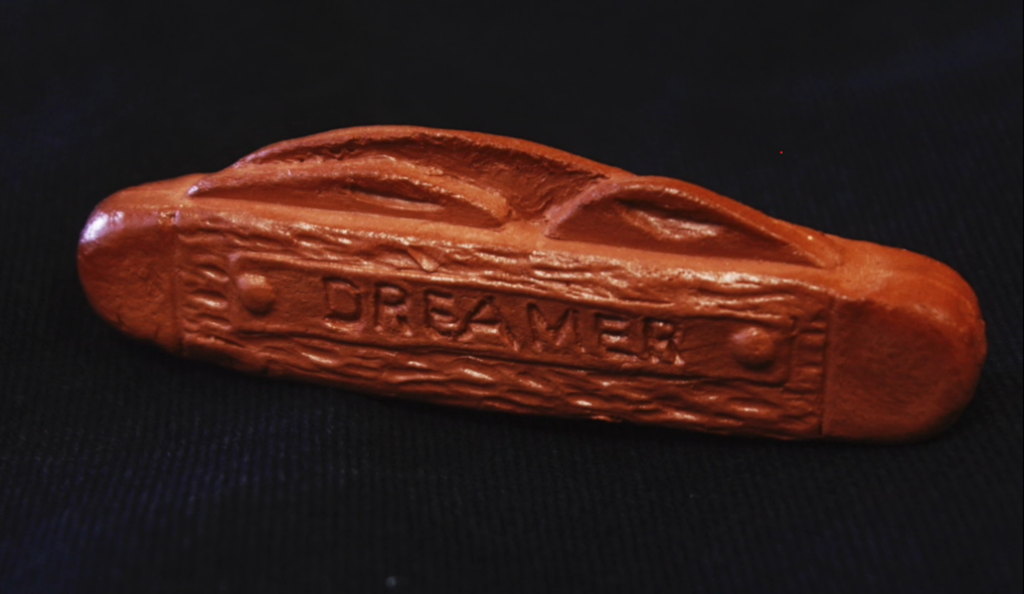
Eventually Ron began to make the shapes he saw on the alphabet strip in the classroom out of clay. He would hold the shape in his imagination until he got home. He would ask his brothers “What’s? What’s?” in his limited communication ability. Slowly he began to build pictures in his mind of the letters of the alphabet. Little did he know, this was going to form the basis of his life’s work.
Another diagnosis: a genius
Thankfully, people saw through Ron’s limited verbal communication ability to see the intelligent person underneath. At 17 a teacher arranged for Ron to have his IQ tested in a special testing process designed for those with limited communication and reading.
The tests were grueling, taking place over a week.
Ron scored 137. Genius level.
They immediately got him into speech therapy and his verbal language rapidly expanded.
Learning to speak made words part of Ron’s universe. He voraciously used clay to understand concepts and words – each time building upon what he had already mastered. Between the ages of 17 and 27, he had created more than a thousand ideas and words in modeling clay. By the time he was 27, his IQ score had risen to 169!
These concepts were abstract ideas that many neurotypicals grasp at a young age, concepts like order, chaos, time and responsibility. These concepts became the foundation for two of the Davis Method’s most transformational programs, the Davis Autism Approach® and The Davis Concepts for Life programs®.
“What inspired me to help others with autism is that I am myself autistic. I know what it feels like, and I know the limitations that exist as a result of it. I realized that, given I had found my own way through this chaos (of autism), I could provide a ‘map’ for others of my kind to follow.”
Ron Davis
But reading was still a problem.
His doctors decided he must have a damaged brain. They said reading would never be possible for him.
Despite this, Ron excelled when he did hands-on training as an Optical Technician, then Electronics Technician, work that led him to create wiring schematics for the Space Race. Schematics and blueprints didn’t require him to read. A promotion into administration would. As soon as he heard he had the promotion, Ron quit before being exposed as illiterate.
Back to clay: the place where language doesn’t exist
Sculpting was still part of Ron’s life. He had continued it from his early days with clay in the backyard.
He eventually earned notoriety and financial achievement as a sculptor. During an interview Ron was asked “how, how, can you do what you do?” Ron couldn’t explain it in words. He could just innately bring his mental images to life with his hands.
As Ron contemplated his creative process, he realized he would get so lost in his sculpting, losing track of the world around him, just his hands and his thoughts working together to make creative imagery life-like. No language was necessary.
That was the penny drop moment. If he could go to a place where language didn’t exist, could he do the opposite? Find a place where it did exist?
Months later, at an artist’s convention, three other sculptors at his table said, one after another, that they couldn’t read. One used the word “dyslexia.” He knew there must be a connection somewhere.
Ron decided to use his engineering brain to find the solution. He had to reverse engineer his creative process to find the answer.
Ron locked himself in a hotel room for days to experiment. He discovered his dyslexia was caused by disorientation, a common occurrence that happens to everyone at times when you are overwhelmed by stimuli or thought, or when your brain receives conflicting information from the different senses and attempts to correlate the information. You would experience it if you stood up and spun around ten times.
Disorientation happens to a dyslexic brain when it looks at flat, two-dimensional symbols on a page. The powerful three-dimensional brain is trying to formulate mental pictures of entire concepts and ideas. A picture thinking brain doesn’t have an internal monologue that reads word by word. They are trying to visualize an idea by adding elements with each word encountered. Easy enough for words that have visual concepts, like “elephant,” “home,” or “school,” – not easy for words like “the,” “if,” or “in,” triggering disorientation.
Once he figured this out, he was able to read effortlessly for the first time in his life. He picked up Treasure Island, by Robert Louis Stevenson, the words held still, the spacing was accurate. He finished the book in one sitting and cried.
The root cause of dyslexia: disorientation
In 1982, Ron, together with his wife, Alice Davis, and Dr. Fatima Ali, established the Reading Research Council to further investigate what he had discovered. The successes were overwhelmingly positive. Word of mouth spread and soon hundreds of dyslexics were flooding to the doors of the Reading Research Council. The overwhelming demand gave Ron more momentum.
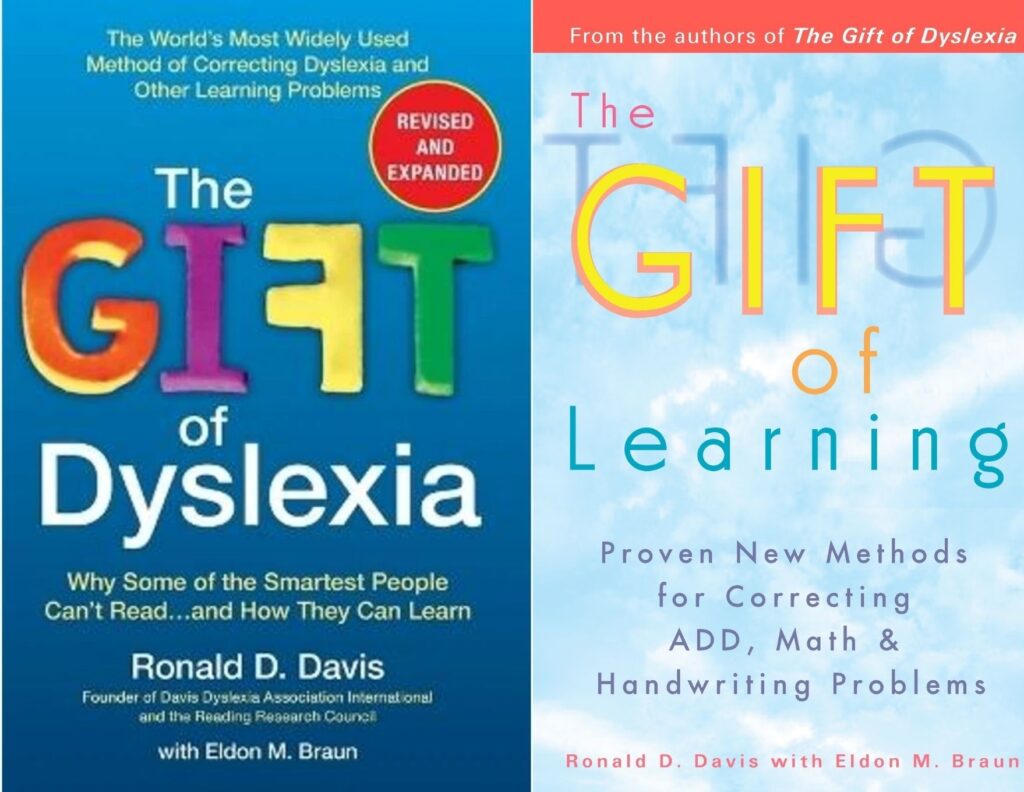
With the goal of reaching and helping as many dyslexic individuals as possible, Ron documented the entire process and published his best-selling book, The Gift of Dyslexia, in 1994 and established Davis Dyslexia Association International in 1995 (now Davis International) to train others in his methods.
Ron came to believe autism, ADHD, dyspraxia, dyscalculia and dyslexia share the underlying cause of disorientation, but different neurotypes experience it differently. For example, in dyslexia, it garbles a symbol on a page where in ADHD, it pulls attention into a vivid inner thought world. The mechanism is the same.
This led to the development of the subsequent programs (Davis® Mastery for Attention, Davis® Mastery for Math, Davis Concepts for Life®, Davis Autism Approach®, Davis® Stepping Stones, Davis® Reading for Young Learners, and Davis® Learning Strategies for schools) that have had equal success and have unlocked education for those who do not respond to mainstream teaching methods.
Word of mouth has continued to spread his work around the globe. His book is now translated into more than 20 languages, and has sold over a million copies. He later authored The Gift of Learning and his autobiography, Dummy, and co-authored Autism and the Seeds of Change with Abigail Marshall.
Neurodivergence: IS a different way of thinking
The Davis Method is the life work of a pioneer. Ron said dyslexia and autism were a different way of thinking, long before that was a mainstream view. Research is starting to catch up. A 2022 Cambridge study found dyslexic thinkers show real strengths in exploration and big-picture problem solving. Temple Grandin’s Visual Thinking argues picture-based thinkers are more common, and more capable, than schools and workplaces assume. Ron reached a similar conclusion decades earlier, from his lived experience. Yet he was labelled a kook and a snake oil salesman, due to his lack of academic credentials in the field.
Ron changed the story people told themselves about who they were and what they were capable of achieving.
If you would like to know more about any of the programs or workshops created by Ron, please contact us
“I identify as being Autistic, it explains every aspect of my life. My real work was and is to find a foundation for the new ones: for the babies born with some, or many, characteristics of the autism spectrum.”
Ron Davis, Dummy
September 1, 2026
BURLINGAME, CA – Ronald Dell Davis, whose extraordinary journey from profound autism and dyslexia, to becoming the creator of the Davis Methods, passed away at home on August 28, 2026, at the age of 84 after a brief illness.
Ron Davis was never supposed to accomplish much. As a child, he was considered profoundly disabled, labeled a “Kanner’s Baby,” an early term for autism. Non-speaking, he struggled to make sense of the world around him. His mother was told that he might never speak, learn, or achieve much beyond what a chimpanzee could.
But there was far more going on inside Ron than anyone could see.
At 17, a teacher saw something others had missed and arranged for him to take an IQ test. He scored 137. He became an engineer during the era of the Space Race and later found success as a sculptor. His extraordinary ability to visualize and manipulate objects in his mind, brought him success in these fields. Reading, however, remained impossible.
One day, in 1980, while trying to answer a letter inquiring about his sculpting skill, Ron realized that his mind could enter a state in which language disappeared and imagery took over. He began exploring this phenomenon and how it related to his inability to read.
This exploration led to Davis’ most profound discovery: the root cause of dyslexia was not brain damage, but a perceptual talent that produced a state of mental disorientation. When Ron discovered how to intentionally “turn off” his disorientations, he found he could read without effort.
In 1982, Ron, together with his wife, Alice Davis, and Dr. Fatima Ali, established the Reading Research Council to further investigate what he had discovered. This research led to the development of the Davis Mastery for Dyslexia Program, and ultimately, to the other Davis approaches for ADHD, Dyscalculia and Autism.
His landmark book, The Gift of Dyslexia, published in 1994, became an international bestseller, selling over one million copies and has been translated into more than 20 languages. He later authored The Gift of Learning and his autobiography, Dummy, and co-authored Autism and the Seeds of Change with Abigail Marshall.
In 1995, Ron and Alice founded Davis Dyslexia Association International to train facilitators in his methods and ensure that his work could reach people far beyond his own practice. What began with Ron’s pioneering ideas grew into an international community of licensed facilitators serving individuals and families in more than 40 countries and 30 languages.
Ron’s work in autism was especially close to his heart. The Davis Autism Approach grew from his unique understanding of autism and his belief that people on the spectrum should be supported through approaches that recognize their strengths, build understanding, and help them participate fully in the lives they choose. His work has touched thousands of individuals with autism and their families around the world.
Yet perhaps the most enduring part of Ron’s legacy cannot be measured in books, programs or numbers. He changed the story people told themselves about who they were and what they were capable of achieving.
The child who had been told he could not learn grew into a man who devoted his life to helping others discover that they could. Ron Davis leaves behind a legacy carried forward by the people whose lives were touched by his work and by those who continue to share his vision.
About Davis International
Davis International continues the work begun by Ronald Dell Davis, supporting the Davis Methods and the international community of licensed Davis facilitators who work with individuals with dyslexia, autism, and related learning differences.

Davis Facilitator and Radio Hawkes Bay – Dyslexia Unpuzzled Podcast host, Nikki Palamountain interviews Margot Young, recently retired Davis Pacific Hub Director, about her journey with Davis.
When Margot Young’s son was struggling at school, the system told her he just wasn’t motivated. No teacher flagged dyslexia. No support was offered. By Year 5, he’d given up entirely, on reading, writing, spelling, and even maths, which he was good at.
Margot went looking for dyslexia help herself. What she found was the book The Gift of Dyslexia by Ron Davis, which led to the a Davis Mastery for Dyslexia program. That program turned her son’s learning around completely.
That experience didn’t just change her son’s life. It changed her career. Margot went on to become a licensed Davis facilitator, then a facilitator trainer, spending 18 years supporting neurodivergent learners and mentoring the next generation of Davis practitioners across New Zealand and the Pacific.
In this conversation with Hawke’s Bay facilitator Nikki, Margot talks about:
- Why so many families feel exhausted and dismissed by the school system
- How the Davis Method works — and why clay-based, multi-sensory learning sticks
- What it means to train others, and the ripple effect that creates
If you’ve been searching for dyslexia help and wondering whether anything can really make a difference, this conversation is worth your time.
By Sophia Goebel, Davis Facilitator
My son never enjoyed school. After the Davis® program, academics became easier and his self-confidence improved—but he couldn’t help comparing himself to his older brother, who naturally loved books, reading, and learning.
Then he found sports.
Everything changed. He loved it. I truly believe his confidence and resilience today stem directly from this athletic foundation, though being a dyslexic athlete came with bumps. He was physically gifted—he dominated on a pure athletic level—but the vocabulary, the plays, the coaching language? Sometimes that confused him. And when he hit middle school and experienced coaching transitions, new coaches brought different teaching methods and terminology he had to decode all over again.
That’s when I realized: what happens at home matters just as much as what happens on the field.
The hours between practices and games—how you prepare your child, how you respond to setbacks, how you reinforce learning, and how you interact with your child during and after the game—can be the difference between a child who thrives in sports and one who gives up.
This isn’t about becoming an assistant coach or turning your backyard into a training facility. It’s about creating a home environment that builds on what’s happening at practice, can rebuild confidence when it wavers, and helps your child develop the resilience that will serve them far beyond sports.
Let’s talk about how to do that and where to start.
Self-Regulation Tools
Before your child walks into practice or steps onto the field, they need to be ready—mentally and physically, that’s where self-regulation tools come in. These are simple techniques you can teach your athlete to get their brain and nervous system into the optimal space for learning and performing.
If you’ve already completed a Davis® Program, you have an excellent focusing tool for academics and learning—keep using that as is. For sports, however, you might want to introduce a sports-specific focus point that works better for athletic performance. For many field sports athletes find a focus point located directly above the forehead works great, as it gives them a wider view of the playing area and helps with quicker reaction times.
If you haven’t completed a Davis® program and don’t have the Davis self-regulation tools, don’t worry. Here are three essential self-regulation tools every neurodivergent athlete needs:
A Focusing Tool: The String Method
A sports focus can often be located directly above the head—about six-inches to a foot above, between the crown and their forehead. Here’s a technique you can teach your child to find and maintain that focus point:
Step One: Find Your Balance
Have your child stand up straight and shift their weight onto one foot. They’re going to balance on one leg—it doesn’t matter which one. The act of balancing requires their brain to orient itself. You literally cannot balance while disoriented. This simple physical act is the foundation.
Step Two: Imagine the Strings
While balancing, have them visualize that there is a string holding them up. Picture a string attached to the crown of their head, gently pulling them upward. This invisible string is holding them in perfect alignment. This visualization gives their brain a clear, physical reference point—something concrete to focus on rather than an abstract idea.
Step Three: Place Your Focus Point
Now have them imagine a dot floating about six-inches to a foot above their head, and just forward of the string maybe in inch to two forward. This dot is their focus point. It’s not moving. It’s not complicated. It’s just there, steady and clear.
Step Four: Return to Your Dot
Whenever they need to refocus in practice or a game have them think of that dot. Imagine the feeling of the string holding them upright and aligned as they see the dot in their mind. If they have a moment, actually balance on one foot. If they don’t have time for that, just mentally picture the dot and feel the strings holding them upright.
Your child will need to experiment with this focus point as they play their sport. If it doesn’t feel quite right or they can’t get into the zone, they may need to shift it slightly.
For example, a baseball player might try it while catching and again while stepping up to bat. The softball and baseball athletes I’ve worked with all really liked this focus point. One soccer player told me he felt much quicker reacting with it, and a hockey player said he could see the court better. If your child swims or does martial arts, this particular focus point might not be the best fit—but the principle still holds: finding a focus where their body feels grounded and in alignment will serve them well.
Once they find the right spot, it becomes a quick mental reset they can use anytime—before stepping up to bat, before a free throw, before taking the field. It is important to practice using this new focal point. After using it intentionally overtime it will become second nature.

A Calming Tool: Nervous System Reset
When your child is feeling anxious or overwhelmed—waiting to bat with everyone watching, or after a frustrating play, they need a way to calm their nerves. Teach them a simple breathing technique: slow, deep breaths in through the nose, and longer exhales out through the mouth. This signals to their body and mind that they are safe and helps release the anxiety that builds in high-pressure moments.
An Energy Tool: The Dial or Lever
In Davis® work, we call the energy tool “your dial.” If your child hasn’t learned this yet, think of it as an energy lever they can actively control and adjust based on the activity. The energy needed to listen to instructions is very different from the energy needed to sprint down a football field or explode off the line. Teach your child to consciously adjust their internal lever before each activity—turning it lower for focus and listening, higher for explosive movement and intensity. They’re in control of dialing in exactly what they need.
These three tools—focus, calm, and energy—work together to prepare your athlete’s brain and body for success.
Pre-Teaching Vocabulary and Concepts
When starting a new sport or going back to a sport for a new season, vocabulary can change, when this happens, it can be very helpful to pre-teach vocabulary and concepts at home to help reduce the cognitive load your child faces at practice.
When your child walks into practice and hears unfamiliar terminology or new concepts for the first time, they’re trying to do three things simultaneously:
- Decode and understand the words
- Grasp the concept being explained
- Figure out how to execute it physically
That’s a lot. For a dyslexic that often processes language more slowly, it’s can be too much and they have disoriented or fall behind and miss information. For a kid with ADHD, following the sequencing and timing of a new play can cause some disorientation, resulting in missing understanding.
When you pre-teach vocabulary and concepts at home, your child arrives at practice already familiar with the language and basic ideas. Now they can focus their cognitive energy on execution and refinement rather than basic comprehension.
Ways to Pre-Teach Effectively
Get the practice schedule or curriculum in advance
Ask the coach: “What will you be working on this week?” or “What plays or skills are coming up?” Most coaches are happy to share this information, especially when you explain it helps your child prepare.
Introduce terminology in a low-pressure setting
A few days before practice, casually introduce the terms:
“Hey, I heard Coach is going to work on ‘pick and roll’ this week. Want to see what that looks like?”
Then show them a short video clip (YouTube is full of examples) or demonstrate with household objects.
Use visual aids and or physical demonstration
Don’t just define the term verbally. Show it:
- Watch professional athletes execute the skill
- Watch a YouTube lesson on it.
- Walk through the movements
- Have fun:model it in clay
- Draw a simple diagram or
- Use action figures or toys to demonstrate a play
- Make it interactive and playful
“Okay, you be the defender, I’ll be the offensive player. I’m going to show you what a ‘give and go’ looks like.”
Learning through play removes pressure and makes the concept stick.
Keep it brief
Five to ten minutes is plenty. You’re not teaching them to master the skill—just familiarizing them with the concept and language so it’s not brand new when the coach introduces it.
Real-World Example
Your child’s soccer coach is introducing “overlapping runs” next practice.
A few days before practice:
- You watch a 2-minute YouTube video together showing overlapping runs in professional soccer
- You walk through it in the backyard: “You dribble here, I run past you here, you pass to me here”
- Have them teach it back to you.
At practice:
When the coach says “We’re working on overlapping runs today,” your child thinks, “Oh yeah, I know what that is!” Instead of disorienting, they experience recognition and confidence.

The Confidence Multiplier
Pre-teaching doesn’t just reduce confusion—it creates a powerful psychological advantage.
Your child walks into practice feeling prepared and competent. When the coach introduces the concept, they might be one of the first to understand it. They might even demonstrate it successfully on the first try.
Suddenly, they’re not the kid who’s a step behind. They’re the kid who is a step ahead.
That feeling is transformative.
Ongoing Support
Learning-Focused Conversations After Practice
Instead of “How was practice?”—which usually gets a one-word answer—try asking questions that help your child process what they actually learned:
- “What did Coach teach you today?”
- “Did you learn anything new?”
- “What was the most interesting part of practice?”
These questions shift the focus from performance to learning. They give you real insight into what stuck, what confused them, and what might need reinforcement at home. Plus, they help your child recognize their own growth instead of just worrying about whether they did it “right.”
Build a Highlight Reel
Keep a running collection of your child’s best moments—video clips, photos, or even just a written list of wins big and small. You’ll miss recording plenty of moments (especially during practices) and that’s okay. What matters is having something to pull out when you need it.
Use this highlight reel strategically:
- Before big games to remind them of what they’re capable of
- When confidence dips after a tough practice or loss
- Just to celebrate progress and growth
Here’s what surprised me: my son and I would work on his highlight reel at different times during the season, but when his brother made one set to his favorite music and showed it to him, my son noticed something we’d both missed. His brother (who understands sports more then I do) had picked out different moments than we had. His video showed the screens, the pick-and-rolls, and the passes that led to assists.
Not just the flashy moments or the baskets. My son felt a surge of pride realizing his brother could see how hard he was working, not just the highlight-reel plays. That’s the power of this tool: it shows your child what others see in them.
Difficult Experiences
Even with the best coach and excellent preparation, your child will have hard days. They’ll make mistakes. They’ll feel frustrated. They might have a game where nothing goes right or a practice where they feel like they can’t do anything correctly.
How you respond in these moments can really help your athlete build resilience.
What Not to Do
In these moments, avoid minimizing their feelings, jumping straight to solutions, or comparing them to others. All of these responses—whether it’s “It wasn’t that bad,” “Here’s what you should do differently,” “But you did better than your teammate,” or “I’m so proud of you!”—dismiss their experience and create distance.
What to Do Instead
Validate their feelings first:
“That was a really frustrating practice, wasn’t it?” or “I can see you’re disappointed with how that game went.”
Let them know their feelings make sense. Sit with the disappointment for a moment before trying to move past it.
Ask what they’re thinking:
“What was the hardest part for you?” or “What are you feeling most frustrated about?”
Sometimes they just need to be heard. Other times, this helps you understand what specifically went wrong so they can address it. This can help move from frustration to empowerment.
Help them identify one thing that went well:
After they have shared their experience, you can help them identify something that went well such as “I noticed you made a great pass in the second half” or “Your footwork on that one play was really solid.”
This isn’t sugar coating—it’s helping them see that a bad game doesn’t mean everything was bad. It builds the habit of balanced self-assessment.
Reframe mistakes as information:
“So you’re saying the timing was off on that play. That’s really good to notice. Now you know what to focus on in practice.”
Mistakes become data points for improvement rather than evidence of failure.
Remind them of past progress:
“Remember when you first started and [specific skill] felt impossible? Now you do it without even thinking. This new thing will get easier too.”
This builds confidence that struggle is temporary and improvement is possible.
Ask what they could do to make a change:
Here’s where you help them figure out what actually went wrong—and what they can control next time.
Start with: “What do you think you could do differently next time?”
Listen to their answer. They might say “I need to practice that move more” or “I didn’t understand what the coach was asking” or “I felt confused out there.” All of these are valuable.
If it’s a skill gap (they recognize they need more practice):
“That makes sense. That’s exactly what practice is for—building that skill. What part do you want to focus on first?”
This frames practice as the solution and puts them in control of what to work on. You can offer to practice together in the backyard, or ask if they want to watch a video of that play first.
If it’s a self-regulation gap (they felt confused, disoriented, or anxious):
Ask: “Did you feel clear about what you were supposed to be doing, or were there moments where things felt confusing?”
If they recognize the confusion or anxiety, you’ve found the real issue. Then: “Remember those focusing and energy tools we’ve been practicing? That’s exactly what would help you feel more grounded and clear next time. Want to practice that before your next game?”
If they didn’t notice the disorientation, you can gently point it out: “I noticed you seemed a little lost out there. Sometimes when we’re not feeling grounded, it’s hard to focus on what the coach is saying. That’s where your focus tool comes in.”
The key: help them recognize what went wrong so they’re motivated to use their tools next time. They’re not being told what to fix—they’re discovering it themselves.
Offer physical comfort and connection:
Sometimes a hug, sitting together quietly, or going for ice cream says more than words. Physical presence communicates “I’m here with you in this” without requiring them to talk about it.
The Long-Term Vision: Sports as a Resilience Builder
Here’s what you need to remember on the hard days, when you’re wondering if all this effort is worth it:
Sports aren’t just about athletics. They’re about building the whole person.
For your dyslexic child, sports can be the place where they discover something school might never show them: They are capable, competent, and strong.
Sports Build Identity Beyond Academics
In school, your child may be “the one who struggles with reading” or “the kid who needs extra help.”
In sports, they can be “the player with great field vision” or “the teammate who never gives up” or “the athlete with creative moves.”
This alternative identity reminds them—and everyone else—that they are more than their academic challenges.
Sports Teach Resilience Through Lived Experience
You can tell your child a thousand times that struggle leads to growth. But it’s different when they live it—when they practice a skill over and over until they finally nail it, when they lose a game and come back to play stronger, when they make a mistake and figure out how to recover.
That’s when it clicks. Not as an idea, but as something they’ve actually done. And that lived experience of pushing through and improving? It carries into everything else in their life.
Sports Provide Concrete Evidence of Progress
In school, your dyslexic child works hard—but progress often feels invisible. They study, they try, they put in effort, yet the results can feel abstract and slow to appear.
Athletic progress is different. It’s physical and visible. Your child can see and feel themselves getting better in real time:
“I couldn’t dribble with my left hand at the start of the season, and now I can”
“I used to be afraid of the ball, and now I’m not”
“I didn’t understand that play, and now I can execute it”
This visible, concrete evidence of improvement—where effort directly translates to measurable progress they can witness themselves—builds self-efficacy: the belief that focused effort actually leads to improvement.
Sports Create Community and Belonging
Being part of a team gives your child a place where they belong, where they contribute, where they matter.
For children who may feel isolated or different in academic settings, this sense of belonging can be profound.
Sports Teach That Different Strengths Matter
Your child learns that there are many ways to be valuable:
- Speed matters, but so does strategy
- Scoring matters, but so does defense
- Individual skill matters, but so does teamwork
In the real world, people need all kinds of strengths. Speed and strategy. Scorers and defenders. Solo players and team players. School often only values one narrow set of skills. Sports shows your kid that the world is much bigger than that.
The Skills Transfer Beyond the Field
The skills your child develops in sports—resilience, teamwork, communication, handling pressure, recovering from mistakes, working toward long-term goals—are exactly the skills they’ll need in careers, relationships, and life.
You’re not just raising an athlete. You’re raising an adult who knows how to persist through difficulty, who can collaborate with others, who understands that failure is temporary and improvement is possible.
Your Role in the Long-Term Vision
Your job isn’t to make your child a star athlete or to ensure they never struggle.
Your job is to:
- Help them find environments where they can succeed
- Teach them to advocate for what they need
- Support them through setbacks
- Celebrate their growth
- Remind them of their strengths when they forget
- Keep the long-term vision in focus when the short-term is hard
You’re teaching them that they can navigate and thrive in a world that isn’t always built for how their brain works.
The Ripple Effect
When neurodivergent children find success in sports:
Their confidence grows and spills into other areas. They start advocating for themselves in school. They try new things. They take risks. They believe in their ability to figure things out.
The resilience they build on the field shows up in other places of life. The problem-solving skills they develop in games help them find creative solutions to academic challenges. The identity they build as a capable athlete balances the identity of “struggling student.”
Sports become the foundation that supports everything else.
Your neurodivergent child can find joy, confidence, and belonging in sports. They can build resilience that transforms their entire life.
And you—through your advocacy, your support, and your unwavering belief in their potential—are making that possible.
You’ve got this. Your child has got this. And together, you’re building something that will last far beyond any season.
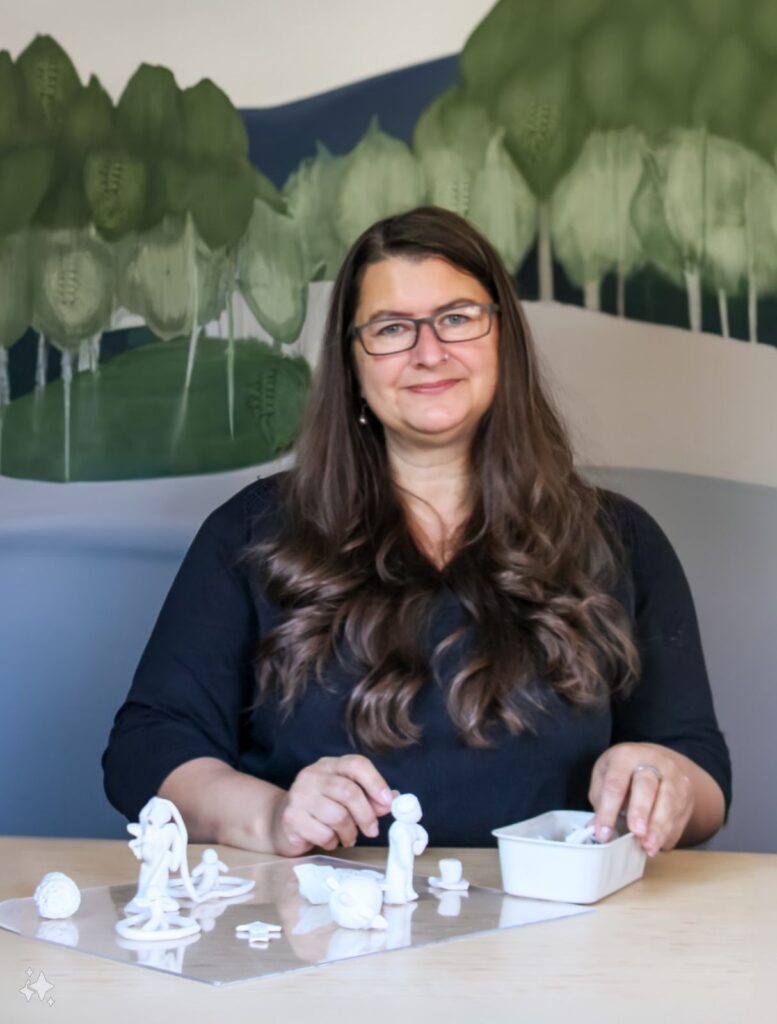
Sophia Goebel has been a licensed Davis® Facilitator since 2014. Her journey began in 2009 when she discovered Ron Davis’ bestselling book, The Gift of Dyslexia, while searching for solutions to support her dyslexic son. Today, her son, now 23 years old, plays in the highest level of college basketball, proving that dyslexia and athletic achievement can thrive together. Through her own Davis practice, Learning Tools in Bothell, Washington, Sophia loves to work with neurodivergent athletes. Sophia has gained invaluable strategies and real-world experiences that she now shares with families navigating their own dyslexia journeys. Sophia is based in Washington State.
This article has been re-shared from Sophia’s personal blog with her authorization. Connect with Sophia
Can you child remember every dinosaur species? Build working robots? Or tell you the most vivid, imaginative stories? But can’t remember what comes after the letter M? This article is for you.
In an online parent forum recently, a mum posted that her 4th-grade son couldn’t reliably sing the alphabet. Different gaps each time, different errors on different runs. She described feeling helpless. He had a tutor. He worked hard. The evenings were consumed by homework he couldn’t finish. And still, the alphabet didn’t stick.
The thread drew hundreds of responses. Parents sharing versions of the same story: children who know their letter sounds but can’t sequence them. Kids who sit at the top of the maths class but can’t recite the days of the week. Children being sent home with more rote practice, yet that’s the one thing that keeps not working.
If that’s your household, here’s what you need to hear: this is not a memory problem in the conventional sense. And that difference matters, because treating it like one is why the standard approaches keep missing the mark.

Arbitrary sequences are a different kind of hard for picture thinkers
The alphabet is what’s called an arbitrary sequence, a fixed order with no underlying logic. There’s no reason D follows C other than convention, vowels are mixed with consonants and most frequently used letters are not grouped together. The same is true for days of the week, months of the year, and times tables. You can’t reason your way through an arbitrary sequence. You have to hold it as a whole, intact, in working memory.
For neurotypical children, repetition builds that whole automatically. For many neurodivergent brains, repetition without understanding doesn’t anchor, because there’s nothing to understand. The sequence is meaningless, so it doesn’t stick the way meaningful information does. More practice doesn’t fix this. It just means more practice at the thing that isn’t working.
This shows up across sequential tasks: days of the week, months of the year, telling time, following multi-step instructions. It’s the same underlying challenge presented in different places. And it’s one of the most commonly missed aspects of dyslexia and ADHD assessments, because it doesn’t look like a reading problem until you understand what’s behind it.
Davis facilitators describe this through the lens of disorientation: when a dyslexic or ADHD mind encounters confusion or overwhelm, like the confusion of a meaningless sequence, it responds by generating its own mental impressions to compensate. The child isn’t forgetting the alphabet. Their brain is doing exactly what it’s wired to do. The problem is that conventional teaching assumes a neurotypical brain will just absorb arbitrary sequences through exposure. For many kids, that’s simply not how their minds work.
“Ron Davis could not learn the alphabet in order until he was an adult. When he figured out why, he designed programs specifically to fill in the conceptual gaps for others like him.”
Davis founded his first centre in 1982 after overcoming his own severe dyslexia at age 38. He was autistic, had been unable to read until adulthood, and had built an engineering career entirely around compensating for what school had failed to teach him. The alphabet, for Ron, wasn’t a minor gap. It was a symbol of everything that arbitrary-sequence learning demands from a brain wired for picture thinking.
Grasping the concept of sequence
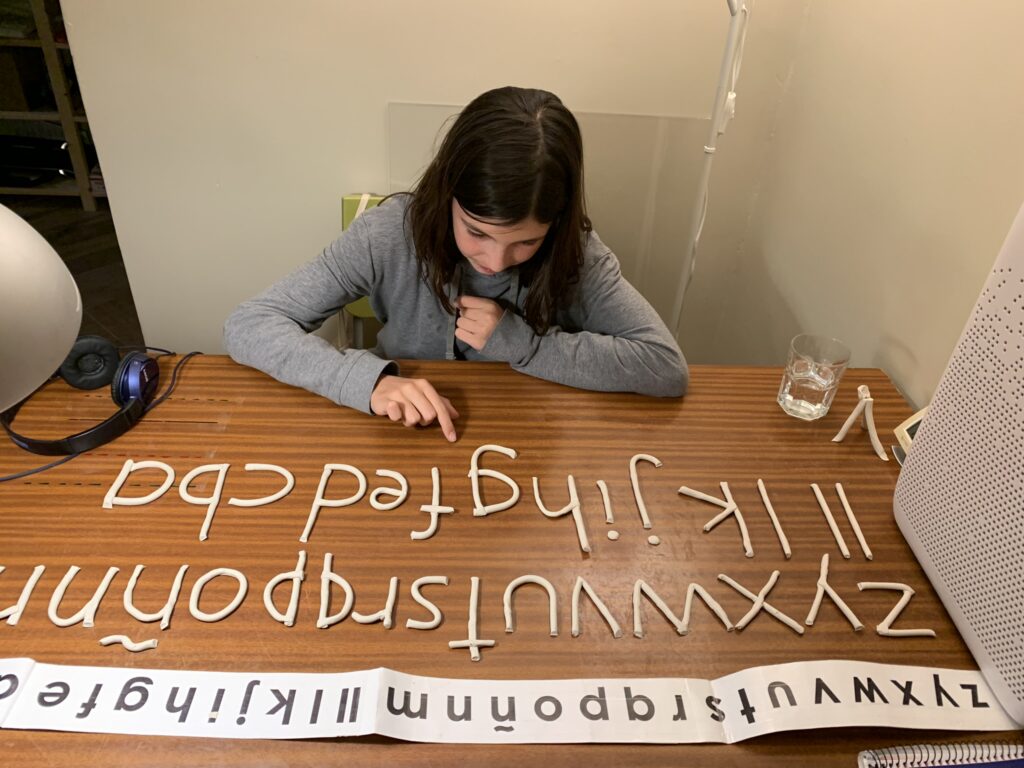
One of the core components of the Davis Attention and Dyslexia programs is mastery of the concept of sequence itself: understanding that some things have a fixed order that must be followed precisely, and that order is a thing you can hold, check, and correct. This isn’t taught through repetition. It’s taught through hands-on clay work — making the concept tangible before applying it to letters.
Once the concept is genuinely understood, the alphabet stops being an arbitrary list to memorise and becomes something the child can deliberately work through. In Davis programs, mastery of the alphabet typically takes between two hours and two days. For many families, it’s one of the first moments they see their child’s confidence visibly shift.
Things worth trying
- Stop drilling. It reinforces the failure experience without building understanding.
- Use physical letters like tiles or magnets so your child builds the sequence with their hands, not just their ears.
- Ask the school to reduce homework volume while support is in place. The nightly battle is exhausting both of you, and exhausted children don’t retain anything.
- Look at whether the current accommodations match the actual problem. A child taking three hours to complete what takes classmates forty minutes needs a different plan, not more of the same plan.
- Read Ron Davis’s Book: The Gift of Dyslexia – available at good bookstores and many libraries.
One more thing
Buried in the replies was a comment from a parent who’d been where every other parent in that thread was sitting. Her daughter had struggled with sequencing, days of the week, months of the year. She’d done a Davis program. Eleven years later, her daughter had graduated college.
“Life would have been so different without the concepts she learned. I later trained to become a Davis Facilitator myself, because I was so blown away by the difference in her.”
That’s what happens when the right intervention addresses the underlying cause, not the symptom.
Your child not knowing the alphabet in 4th grade is not a character flaw, a parenting failure, or a sign of what their life will look like. It’s a signal that something specific isn’t being addressed. The right approach exists. It just doesn’t look like singing the song one more time.
If sequencing is a consistent pattern for your child — across the alphabet, days of the week, months of the year, it’s worth a conversation with a specialist who understands what’s driving it. Davis facilitators work with this directly. An initial conversation costs nothing.
Related Articles:
- The Ron Davis story
- What Causes Dyslexia? Understanding Disorientation and Dyslexic Perception
- The Gift of Dyslexia: Understanding Dyslexia as Talent, Not Deficit
- Dyslexia and Comprehension: When the Words Don’t Stick
Frequently asked questions:
Why can’t my child remember the alphabet even with daily practice?
The alphabet is an arbitrary sequence, there’s no logic to the order, just convention. For many dyslexic and ADHD or neurodivergent learners, repetition alone doesn’t anchor arbitrary sequences the way it does for neurotypical learners. More practice at the same approach produces more of the same result. The issue is the method of delivery.
Is forgetting the alphabet a sign of dyslexia?
It can be, particularly when it shows up alongside other sequencing difficulties like days of the week, months of the year, multi-step instructions, phone numbers. On its own it’s not diagnostic, but it’s a pattern worth discussing with a specialist who understands how dyslexic and ADHD and neurodivergent brains process ordered information.
What’s the difference between a memory problem and a sequencing problem?
Memory problems affect recall broadly. Sequencing problems are specific to ordered information with no inherent meaning, like the alphabet, timetables, or days of the week. A child can have an excellent memory for facts, stories, and spatial information, and still find arbitrary sequences genuinely difficult to hold. The two require different approaches.
My child knows all the letters but can’t put them in order. Is that normal?
Yes, and it’s an important distinction. Letter recognition and alphabet sequencing are separate skills. Many dyslexic learners know every letter by name and sound but struggle to produce the sequence reliably. This tells you the letters are there, the sequencing concept is what needs direct attention.
Across the world, families and individuals are waiting. Waiting for an appointment. Waiting for a report. Waiting for a label that gives them permission to act. But for hundreds of thousands of people, that wait is the problem, feeling stuck in limbo, unsure where to turn while life carries on around them.

The reality of the diagnosis gap
The numbers are stark. In the United States, nearly two-thirds of autism assessment centres have wait times longer than four months. Fifteen percent report waits of over a year, or waitlists so long they’ve stopped accepting new referrals altogether.
In New Zealand, a formal dyslexia assessment costs between $1,000 and $3,500 and requires a registered Educational Psychologist or C-Grade Assessor. There’s often a waiting list on top of that. In the UK, private spending on ADHD and autism assessments more than doubled in a single year between 2023/24 and 2024/25, as families turned to private providers to escape public system delays.
The barriers aren’t just about time. Cost, geography, language, and systemic bias all affect who gets diagnosed and when. Research consistently shows that women, people from ethnic minority communities, and those in lower-income households face longer waits and higher rates of missed diagnosis.
While families navigate all of this, the person who needs support is still waiting.
A different starting point
The Davis approach was not created in a clinic or a research institution. It was created by Ron Davis, a man who grew up as a non-speaking autistic individual with severe dyslexia. He had no formal education and no diagnosis, at a time when autism affected roughly one in 660,000 people.
Ron didn’t have access to a diagnostic pathway. What he had was a direct, lived experience of how a neurodivergent mind works from the inside.
Ron’s early life gave him something that conventional frameworks rarely offer: an inside view of the neurodivergent experience. His discoveries didn’t start with symptom checklists or diagnostic criteria. They started with clay, with color, with the way confusion creates perceptual distortion — and with the question of what happens when you remove that distortion.
That origin matters. It means the Davis approach was never built around diagnostic categories in the first place.
What the traditional model misses
Conventional support for neurodivergent individuals tends to follow the diagnosis. You get the label, then you get the help. The label determines the program, the specialist, the funding pathway, the accommodations.
The problem is that this model has significant limitations. It pathologizes natural cognitive differences, treating different ways of thinking as deficits. It can’t explain why strengths and challenges coexist, or why diagnostic categories overlap so heavily. And it consistently misses the underlying mechanism driving the difficulties.
Research bears this out. Among autistic individuals, 50–70% also meet criteria for ADHD. Between 65–73% experience dyslexia-type reading difficulties. Co-occurrence is the norm, not the exception, which means a diagnosis of one condition rarely tells the full story.
The Davis view is that autism, ADHD, dyslexia, dyscalculia, and dyspraxia are not separate disorders with unrelated causes. They are different expressions of the same underlying mechanism: disorientation, a natural, automatic shift in perception that becomes a habitual default when confusion, stress, or sensory overload goes unaddressed.
Once you understand that mechanism, the diagnostic category becomes less important than the person in front of you.
What this means in practice
Because the Davis approach works from the root cause rather than the label, it doesn’t require a diagnosis to begin. A facilitator works with how an individual actually thinks and perceives, their sensory experience, their relationship with the physical world, their capacity for orientation and self-regulation.
A diagnosis doesn’t change that process. It doesn’t change what a facilitator does, or how effective the work can be.
This matters enormously for the families currently sitting on a waitlist. It matters for adults who have managed their whole lives without ever receiving a formal assessment. It matters for people in communities where diagnosis is expensive, inaccessible, or culturally complicated.
As Ron himself put it: all knowledge is experiential. You can’t do this to someone, or for them. They have to do it themselves. The starting point is what’s there — not what a report says.

Not instead of diagnosis, alongside it
To be clear: Davis is not a substitute for the diagnostic process, and we don’t diagnose. For many people, diagnosis opens doors, to school accommodations, to funding, to understanding. If you’re pursuing assessment, that process has real value and is worth continuing.
The point is simply that support doesn’t have to wait for a diagnosis.
Davis programs can run alongside a diagnostic process. Many families begin Davis while still on a waitlist. Others come to us years after a diagnosis, having tried other approaches. Some come with no diagnosis at all and find that the work is just as relevant, just as effective.
What matters is not the label. It’s the person.
Want to know more?
How the Davis Method works The Davis approach is built around a simple idea: if you understand the root cause of a difficulty, you can address it directly. Read more about the method behind the programs. → The Davis Method
Ron Davis: from non-speaking autism to changing lives Ron Davis grew up as a non-speaking autistic child with no formal education. His story — and the discoveries he made along the way — became the foundation for everything Davis does. → The Ron Davis story
What Davis programs are available? From autism and ADHD to dyslexia and dyscalculia, Davis offers specialist programs for children and adults of all ages. → Explore Davis Solutions
Hear from families and individuals Real experiences from people who have been through Davis programs. →
- Davis Autism Approach® – Isaac & Juliana
- Davis Mastery for Dyslexia® – Kristiina’s story
- Davis Autism Approach® – Faga’s story
- Davis® Mastery for Math – Natalie’s story
- Davis Autism Approach® – Sam’s story
- Davis® Mastery for Attention – L.B’s Story
- Davis® Mastery for Dyslexia and Davis Concepts for Life – Stephen’s story
- Davis® Mastery for Dyslexia – T.R’s story
- Davis® Mastery for Dyslexia – Alex’s story
- Davis Concepts for Life® – Anonymous story
- Davis Autism Approach® – Albert’s story
- Davis® Concepts for Life and Mastery for Dyslexia – Nicola’s story
Find a Davis facilitator Davis facilitators work with clients worldwide, in person and online. → Facilitator Directory
Publish date: World Autism Acceptance Day, April 2
Today is World Autism Day. And if you’ve been paying attention to how the conversation around autism has shifted, you’ll have noticed a change in language.
Autism Awareness. Autism Acceptance. They sound similar, but they’re not.
Awareness is where the conversation started
Autism awareness campaigns have been running since the 1970s. They’ve done useful work, more families recognizse autism earlier, more schools have started thinking about inclusion, and autism is more visible in public life than it’s ever been.
But awareness has a ceiling.
Knowing autism exists doesn’t change whether an autistic person feels safe enough to be themselves. It doesn’t change whether they spend their energy masking who they are just to get through the day. It doesn’t change whether they have the tools to stand in who they are, and participate fully in the life they choose.
Awareness tells the world autism exists. Acceptance changes what happens next.
The shift came from autistic people
The move from awareness to acceptance wasn’t driven by organizsations or campaigns. It was driven by autistic people themselves.
The Autistic Self Advocacy Network has framed April as Autism Acceptance Month since 2011, calling for autism to be recognizsed as a natural part of human experience, not a condition to be fixed or feared. The language changed because the autistic community asked for it to.
That matters. Because acceptance isn’t something that gets handed to autistic people from the outside. It starts from within.

The real cost of not accepting yourself
Many autistic people mask, suppressing natural behaviours, forcing eye contact, mirroring social norms, to fit into environments that weren’t built for them. It’s exhausting. Over time it leads to burnout, anxiety, and a loss of identity.
Masking happens when an autistic person hasn’t yet built the foundational sense of self to stand in who and what they are. When the world’s message — spoken or unspoken — is that your natural way of being isn’t acceptable, you learn to hide it.
External acceptance matters. But self-acceptance is where the real shift happens.
When an autistic person develops a strong enough understanding of how they experience the world, and the tools to navigate it on their own terms, the weight lightens. Not because the world suddenly becomes more accommodating. Because they no longer need it to be.
Ron Davis knew this firsthand
Ron Davis was autistic at a time when the word didn’t yet exist for what he was. He was labelled a Kanners Baby (coined by Leo Kanner to describe young children or infants with severe social, communication, and behavioral differences).
As a child he didn’t speak. Doctors told his mother he would never learn, never amount to much. The world had no framework for his brain, so he built his own. He didn’t mask. He didn’t try to become neurotypical. He stood as himself, figured out how his mind worked, and built a life, and eventually a career as an engineer and sculptor.
That experience gave Ron something academic researchers didn’t have, a firsthand understanding of what it actually takes for an autistic person to find their footing in the world. And it gave him a mission: to help other autistic people do the same.
The Davis Autism Approach® — built on acceptance, not correction
The Davis Autism Approach® wasn’t designed to make autistic people appear more neurotypical. It was designed to empower autistic individuals to participate fully in the life they choose, all on their own terms, as themselves.
It starts with individuation, developing a strong, stable sense of self. From that foundation, autistic individuals build the self-awareness, self-regulation, and life concepts that allow them to engage with the world without needing to mask who they are.
As Ron himself said: “If I could find my own way through this chaos, I could provide a map for others of my kind to follow.”
That map doesn’t lead to neurotypicality. It leads to a life that genuinely works for the person living it.
What acceptance looks like today
On World Autism Day, acceptance looks like listening to autistic voices. It looks like building support around how autistic brains work, not against them. It looks like autistic people — children, teens, and adults — having access to tools that build genuine self-understanding.
It looks like standing in who you are. And having the support to do it.
Find a Davis Autism International facilitator near you and start a conversation. 👉
Neurodiversity Celebration Week 2026
This week was Neurodiversity Celebration Week, the theme was “From Awareness to Action.”
It’s a theme worth taking seriously. Because awareness on its own, hasn’t moved the needle much for neurodivergent people.
We’ve had decades of awareness campaigns. Colored ribbons, hashtags, designated days and weeks. And yet neurodivergent people still face higher rates of unemployment, poorer educational outcomes, and support systems that are largely built around fixing what’s “wrong” with them. Awareness tells people neurodiversity exists. It doesn’t change what their experience is like.
Action does.
The problem with how we’ve been thinking about this
Most traditional support systems, in schools, in clinics, in workplaces, still operate from what researchers call the deficit model. This means it identifies what the person can’t do. The method of “fixing” is: Intervene, remediate. repeat.
This type of approach is increasingly recognized as the wrong starting point.
Research published in 2025 confirms what many neurodivergent people and their families have known for years: interventions that focus exclusively on deficits, especially without equal attention to strengths, perpetuate stigma and damage self-esteem. They produce worse outcomes. And they miss the point entirely.
A dyslexic brain that thinks in pictures and sees connections others miss isn’t a broken reading machine, it’s a different kind of thinker. An ADHD brain that hyperfocuses and responds fast under pressure isn’t a disorder, it’s a brain that needs the right conditions to shine. An autistic brain that brings intense focus, pattern recognition, and deep expertise isn’t deficient in neurotypicality, it’s operating from a different, valid set of strengths.
The deficit model doesn’t see any of that. It sees the differences when compared with a neurotypical brain.
Action means changing the question
Moving from awareness to action doesn’t only mean changing systems — though that matters too. It means changing the question we ask about neurodivergent brains.
Not “what’s wrong?” but “how does this brain work?”
Not “how do we fix this person?” but “what does this person need to participate fully in the life they choose?”
That shift from correction to curiosity changes everything about the support that follows.
It also means recognizing that even where systems don’t change, neurodivergent people can build the tools and self-understanding to navigate the world on their own terms. While we wait for the world to catch up, let’s equip neurodivergent people with what they need right now.

Action means changing the question
Moving from awareness to action doesn’t only mean changing systems — though that matters too. It means changing the question we ask about neurodivergent brains.
Not “what’s wrong?” but “how does this brain work?”
Not “how do we fix this person?” but “what does this person need to participate fully in the life they choose?”
That shift from correction to curiosity changes everything about the support that follows.
It also means recognizing that even where systems don’t change, neurodivergent people can build the tools and self-understanding to navigate the world on their own terms. While we wait for the world to catch up, let’s equip neurodivergent people with what they need right now.
Where Davis fits in
The Davis Method wasn’t developed in a research lab. It came from Ron Davis, a dyslexic, autistic man who as a child didn’t speak, and who didn’t learn to read until he was 38 (read his full story here).
Ron didn’t get there through remediation. He got there by understanding how his own mind worked and then asking whether that understanding could help others.
That question became the foundation of the Davis Method. A strength-based, neurodiversity-affirming approach now used across 40+ countries with children and adults with dyslexia, ADHD, autism, and dyscalculia.
It was built from the inside out, by someone who lived it. And Davis has never treated a neurodivergent brain as a problem to solve.
That’s not just a philosophy. It’s a practical difference in how Davis support is designed and delivered.
From awareness to action — what that looks like
This Neurodiversity Celebration Week, action looks like asking better questions. It looks like finding support built around how a brain works, not against it. It looks like neurodivergent people — children, teens and adults — having access to tools that build genuine understanding rather than compensatory workarounds.
It looks like moving beyond awareness and doing something with it.
If you’re ready to take that step, find a Davis facilitator near you and start a conversation. 👉 Find a Facilitator
Unsure where to start? Contact us
Fout: Contact formulier niet gevonden.
By Richard Whitehead, Director, Davis UK & Ireland
Davis UK & Ireland has recently launched NeuroNavigators, an online community designed to support parents, educators, professionals, and neurodivergent individuals at the very beginning of their journey.
Many families discover Davis during a moment of struggle. NeuroNavigators aims to meet them earlier — at the stage of curiosity — providing accessible education and strengths-based understanding before they step into a one-to-one programme.
The community offers free webinars on dyslexia, ADHD, autism, and related learning differences; interviews with Facilitators and programme graduates; practical guidance for parents; and a welcoming discussion space. It serves as a bridge into deeper engagement with Davis programmes and Facilitator training.
In collaboration with The Whole Dyslexic Society (WDS) in Canada, NeuroNavigators is also hosting screenings of WDS’s award-winning new film, Who Knew — Dyslexia is a Way of Thinking, helping to widen public understanding of dyslexia as a different way of thinking.
While open internationally, NeuroNavigators is particularly focused on supporting families and professionals across the UK & Ireland and in emerging Davis regions in Africa and the Middle East. Anyone interested can join the community for free at www.neuro-navigators.net
Read our latest posts:
- Ron Davis went from unable to speak, read or write to best-selling author and neurodivergent pioneer
- Ron Davis, Who Transformed His Own Struggle with Dyslexia and Autism into a Worldwide Movement, Dies at 84
- Nikki Palamountain Interviews Margot Young – How the Book the Gift of Dyslexia changed the lives of a mother and son
- How to Support Your Dyslexic Athlete at Home
- Why can’t my child remember the alphabet?
Dolores Gage was recently invited to deliver an online talk for IE University faculty, reaching professors based in Spain and across IE’s international campuses, including New York. The invitation was circulated to approximately 1,000 faculty members worldwide, with strong engagement for a faculty development session: close to 50 registrations and nearly 40 participants attending live at the start of the session.
The session offered faculty a clear, integrated framework for understanding neurodiversity, focusing on dyslexia, ADHD, and autism. Rather than treating labels in isolation, it highlighted the shared cognitive dynamics behind neurodivergent thinking and learning, as well as their distinct expressions. Faculty were encouraged to reflect on their own teaching and consider small, practical adjustments—like clearer structure and flexible ways to demonstrate learning—that reduce barriers and enhance inclusion.
Feedback was overwhelmingly positive, with participants calling the session “immensely insightful,” “really useful and illuminating,” and “a new perspective that sparked curiosity.” Many planned to apply the ideas immediately, while many expressed how valuable it was to gain a clearer conceptual understanding rather than just additional tools.
The session reinforced the growing interest in higher education for approaches that move beyond deficit models, supporting both student wellbeing and academic potential.
Read our latest posts:
- Ron Davis went from unable to speak, read or write to best-selling author and neurodivergent pioneer
- Ron Davis, Who Transformed His Own Struggle with Dyslexia and Autism into a Worldwide Movement, Dies at 84
- Nikki Palamountain Interviews Margot Young – How the Book the Gift of Dyslexia changed the lives of a mother and son
- How to Support Your Dyslexic Athlete at Home
- Why can’t my child remember the alphabet?
If you’re an adult who struggles with reading, writing, or spelling, you may have dyslexia — and you’re far from alone. Around 10-15% of the population has dyslexia. Many adults reach midlife without ever getting a diagnosis, quietly compensating for difficulties they don’t fully understand.
That changes when you know what you’re working with.
What adult dyslexia actually looks like
Dyslexia isn’t just about reversing letters. As an adult, your experience might look like this:
- You’ve gravitated toward roles that play to your strengths and avoid your weak spots
- You hide difficulties from colleagues, friends, or family
- You struggle with standardised tests, which can block career advancement
- You’re either a high achiever or someone others say isn’t “working to potential” — rarely in between
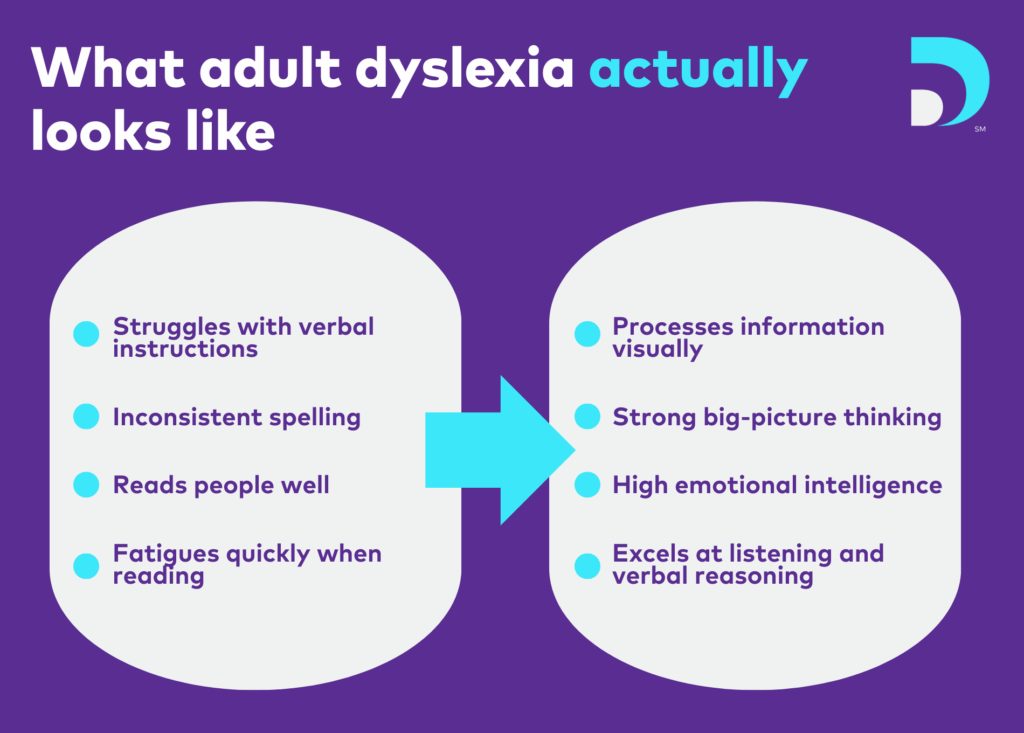
- You’re highly intuitive, read people well, and think in ways others don’t
- You struggle to remember names but never forget a face
- Verbal instructions don’t stick; you need to see things to process them
- You re-read the same paragraph multiple times, or fatigue quickly when reading
- Your spelling is inconsistent — sometimes within the same document
- You rely on spell-check, assistants, or others for written work
These aren’t character flaws or laziness. They’re patterns that point to a different kind of brain — one with real strengths that conventional workplaces often overlook.
The thinking style behind the struggles
Dyslexic adults tend to be strong visual and spatial thinkers. You process information in pictures rather than words, which makes you better at seeing the big picture, connecting ideas, and solving problems creatively. These are the skills that drive innovation.
It’s no coincidence that people like Jamie Oliver, Richard Branson, Steven Spielberg, Keira Knightley, Zoe Saldaña, and Octavia Spencer have dyslexia. Branson has said his dyslexia gave him the ability to see the big picture in business — and in 2024 he launched a free learning platform, the University of Dyslexic Thinking, specifically to help others use those same strengths. Spielberg wasn’t diagnosed until his 60s; he described the discovery as “the last puzzle piece to a great mystery.” These aren’t people who succeeded despite dyslexia. Many credit it directly.
Why stigma still holds adults back
For younger generations, the conversation around dyslexia has shifted significantly. It’s increasingly framed as a different thinking style, not a deficit. But for many adults — especially those who struggled through school before dyslexia was well understood — the stigma runs deep. Low self-esteem, a fear of being “found out,” and years of compensating in silence are common.
That wasted potential isn’t inevitable. It’s the result of not having the right tools or support at the right time.
What you can do about it
The Davis Method was developed by Ron Davis, an adult with dyslexia who found his own way through. The program works with your natural perceptual strengths rather than against them. It’s an intensive one-on-one programme — typically around 30 hours over one week — and follow-up work is done independently, at home, at no extra cost.
The Davis Method is effective for dyslexia and also for related learning differences including ADD/ADHD, dyspraxia, dyscalculia, and dysgraphia. It’s currently available in 38 countries and can be used in virtually any language.
If you’ve spent years managing around your difficulties rather than addressing them, this is a practical option worth knowing about.
Have questions about the Davis Mastery for Dyslexia Program? Contact us
Fout: Contact formulier niet gevonden.
Press release: January 30, 2026
Tuesday, January 26, 2026 – It was clear and cold as Lindsay Hodge, Davis Method Facilitator in Southwest Washington, packed her kids into the car and headed to her office with two of her colleagues in tow. Jeanette Devries and Mirriam Hill, facilitators from BC, drove down to help support Hodge at a lunch time community outreach event she had set up. The goal: to spread the word about the Davis Methods and the new documentary, “Who Knew: Dyslexia is a Way of Thinking” with certain members of the community. The highly acclaimed documentary, created in partnership with The Whole Dyslexic Society and Nice Lady Productions, and funded by TELUS Story Hive, has now won several awards at various film festivals.
Watch the trailer for Who Knew here.
View Lindsay’s profile here.
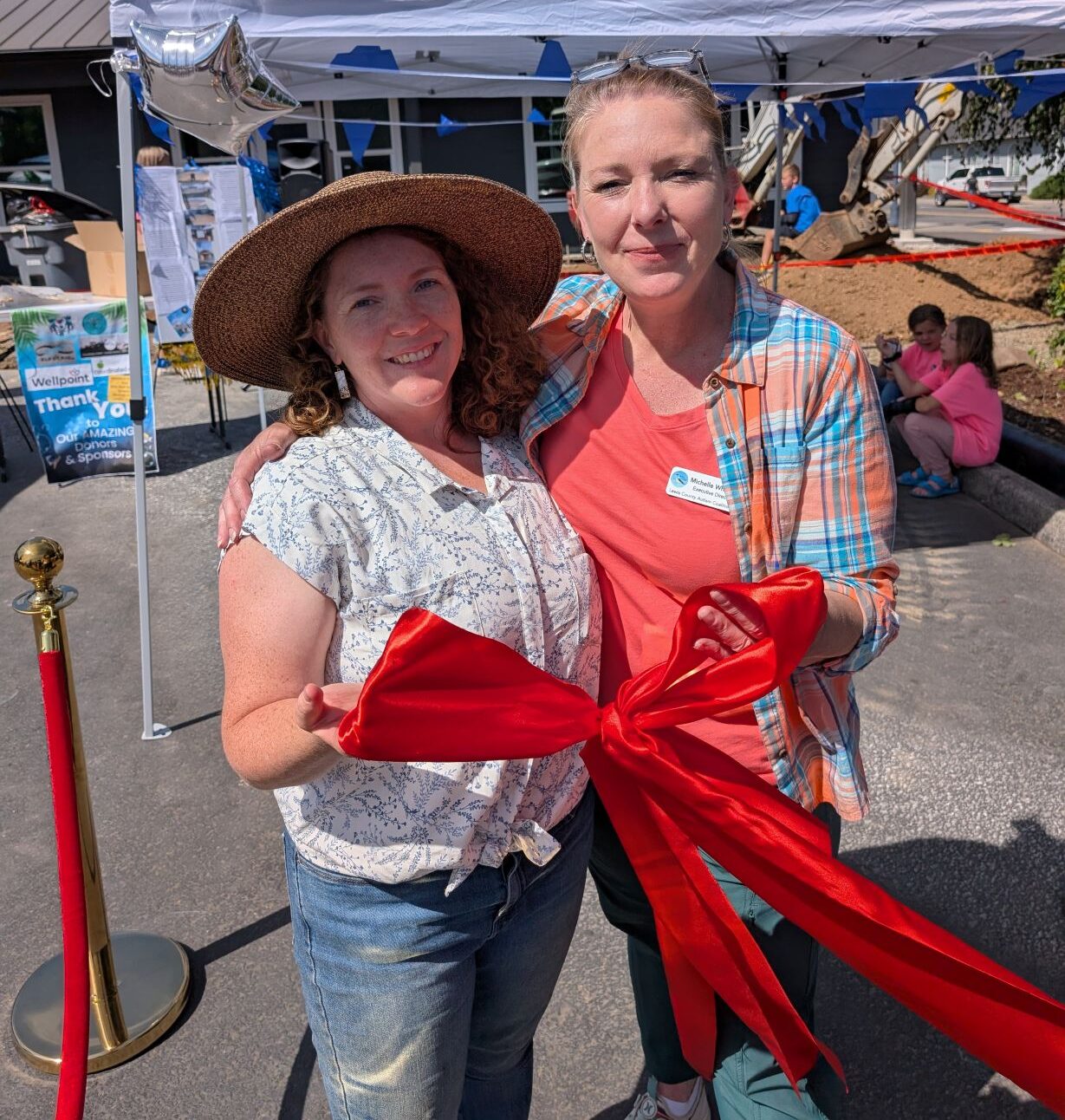
This event had been in the works for a few months. Last year, Hodge initiated a relationship with the Lewis County Autism Coalition (LCAC). By September 2025, she had moved in as an independent service provider to the LCAC’s new community space, The Spectrum and Development Community Center in Napavine, Washington, USA. The Community Center was created with the intention of making resources and services more accessible to families and individuals in need. As neighbors, the Lewis County Pediatrics and Family Medicine Clinic and LCAC intend to work hand in hand to support neurodivergent individuals and their families. Hodge faced only one issue: no one really knew about Davis Method Solutions.
Hodge says, “When I say that I provide Davis Method Programs for Dyslexia, ADHD and students who struggle with Math, the follow up question is always, ‘What is a Davis Method Program?’ I’m so grateful for the hard work that went into that documentary. That was the most wonderful way to introduce what I do to the clinic professionals and LCAC board members.”
Hodge had invited clinic professionals, LCAC board members, and other professionals who were interested in knowing more about the Davis Method, including one representative from an organization called Morningside, which works with disabled persons who need help finding gainful employment. She also invited Davis colleagues from her region, and a few parents of former clients. There were 18 individuals in attendance at the private screening event. Hill and Devries were invaluable support to Hodge in preparing for the event, helping Lindsay to pick up food and conversing with Hodge’s children. In addition to being a licensed Davis Facilitator, Hodge is a homeschool mom of three children, aged 15, 13, and 6 years old. Her children are the reason she came to Davis, and it was a gift to have them in attendance as well.
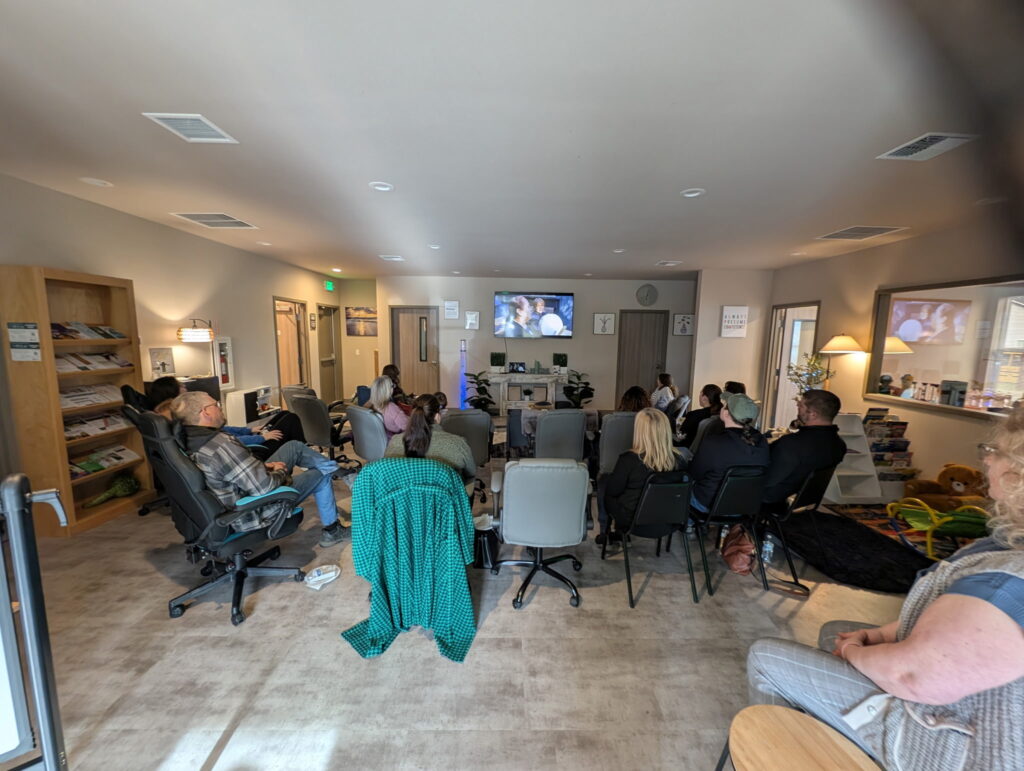
At noon, community members began coming in. They were greeted, asked to sign in, and invited to grab some lunch while they waited to get started. At 12:15, Hodge stood up and introduced the documentary and invited guests to take notes in preparation for the brief Q&A afterward. Then the lights were turned down, and they watched the beautifully made documentary. The audible gasps and “Ohs!” that were heard during the screening were a sign that the audience was engaged. When the lights came up, Hodge’s youngest son jumped up and exclaimed, “MY MOM IS THE BEST!” and everyone shared a little chuckle.
Then came the questions. One guest raised his hand and asked, “How long has this been around?” He shared that he was dyslexic, and that he related on a deep level with Davey, the father of Wynn. “That was me,” he said. Hodge answered with a brief overview of how these methods came to be, and anticipated that the next question would be “Why doesn’t everyone know about this?” She shared a bit about new rebranding and restructuring of the Davis organization, and the hope that they would be better able to help spread the word. She also shared about efforts of Davis facilitators worldwide to get the word out, including the work the Whole Dyslexic Society is doing with the documentary and other outreach. Other participants asked how they could share this information, and providers at the clinic asked how they could refer patients to Hodge or other facilitators. Hodge pointed them to the Davis Method Website for more information on Davis programs, and the Whole Dyslexic Society site for more information on when the documentary will be made public. A few participants even asked about the possibility of becoming facilitators themselves.
There were questions about the structure of Davis method programs, costs, and questions about the effectiveness of the programs. Hodge shared brief overviews, and invited participants to learn more at the Davis Method website or call her directly. It was a powerful moment for those in attendance when David Kerman, father of a former client, spoke up and shared his experience. “We struggled to find help for our daughter in the public school where we lived in Oklahoma… in fact her reading got worse. Then we moved here and started working with Lindsay. Our daughter went from basically not reading at all, to being able to read, and now she is even writing her own stories,” said Kerman. “We attribute all her current success to the work that Lindsay did with our daughter and the Davis Methods.”
As the event wrapped up, guests grabbed stacks of brochures and business cards. Some asked Hodge to contact them directly. Devries leaned in and whispered to Hodge, “You have certainly broadened your reach here today.” Hodge smiled and said, “I sure hope so.” The clear result of the event was that at least a few more people know that Dyslexia is a way of thinking, not a fundamental disability within an individual’s brain, and that there is a way to help those who are struggling as a result of not being taught in the way their brains were born to learn.
Davis facilitators offer one-on-one programs for dyslexia, ADHD, autism, and math learning differences. Programs are personalized to each client and based on the Davis Method developed by Ron Davis.
Find a licensed Davis facilitator near you.
By Dr. Angie Gonzalez, Licensed Davis Autism Approach and Concepts for Life Facilitator / Workshop Presenter
Note: This article was originally published on the Ron Davis Autism Foundation website. We’re sharing it here for our community.
When I present a workshop on Autism and I ask the parents in the room, “Is there a difference between a meltdown and a tantrum?”, the response of positive nods and “Oh yeah” is immediate. Others in the room appear to be a little more perplexed, wondering the relevance of the question.
Most of us have had personal experiences either observing or being at the “Oh my gosh! How do I control this?”, end of a tantrum. But, others have had the repetitive experiences of experiencing meltdowns, either within themselves or by others.
So, what is the difference? Why write about them? Aren’t they the same thing but just different names?
No. What they are and how we should handle them are completely different.
What is a Meltdown and what is a Tantrum?
To understand this, we need to understand a little (don’t worry, very little) about neurotypical childhood development.
In neurotypical childhood development, there are stages. The end of the first stage of development occurs in neurotypical children around the age of two. The end of this stage is ushered in by the onset of individuation (a fancy word meaning the realization that we are separate, individual units from all the things and people around us). With individuation, we realize that we have personal wants and don’t-wants, and we decide it’s time to let everyone around us know what those are. The behavior that arises from this realization has been termed the “Terrible Two’s.” This period is characterized by Tantrums. You know what those are – when a two-year-old wants candy at checkout and you say “No,” yelling, crying, dropping to the floor, turning red, holding their breath, etc. ensues. There is some level of conscious control that is occurring during a tantrum. If the behavior is reinforced, it will continue. If the behavior is disciplined, consistently (not just the one time, people!) it will cease.
A Meltdown is something totally different.
If I see a lizard in my office, I am going to scream (I know this to be true because it has happened more than once). If someone steps on your foot, you are going to pull it away. You will not think about it first, it is instinctual. I cannot tell you why I scream when I see a lizard in the office and not when I see them outside, but I do. The response is generated from somewhere other than my conscious self. It is again, instinctual. You cannot tell me enough times not to scream when I see it for me not to scream.
When someone is having a meltdown, we cannot talk them through it! You cannot rationalize someone out of a meltdown because it is generated from that visceral place of instinctual response. It also doesn’t matter whether you think whatever has ‘triggered’ the meltdown is a reasonable thing to have a meltdown about. You do not get to determine that unless you are the one having the meltdown. Meltdown triggers are specific to the individual. It could be the texture of the mac-and-cheese, the fact that someone is too close to them, the feeling of the tag from a shirt, the smell of the neighbor’s cat, the sound of the bubbling spaghetti sauce… the possibilities are endless. So, the question then is, “what do we do”?

How do we Handle a Meltdown vs. a Tantrum?
Simple.
Protect and support a MELTDOWN
Discipline a TANTRUM
What does that mean?
It means, that if your kiddo is having a meltdown, remove them from the stimulus, protect them from more triggers, make their surroundings physically and emotionally safe, and do what you know calms them. Most of all, regulate your own response. Stay cool and even-tempered in your actions and emotions. These individuals respond more to how you are ‘being’ than what you are saying or doing.
If your child or student is exhibiting behavior that you know precedes a meltdown, remove them from the stimulus, attempt to redirect their attention and give them whatever they use for self-soothing. Again, get yourself in order – stay cool and even-tempered.
In the future, avoid those things that trigger meltdowns. You know what they are – because all parents are the world’s greatest project managers.
If, on the other hand, your child is having a tantrum – this is the time to remain calm and firm. If you told them they can’t have the candy at the cash register, then please do not give in. Remain consistent and let them know that if they continue the negative behavior (say this in ‘little kid’ terms) then (fill in the blank) is going to happen. Then if they continue, the (fill in the blank) has got to happen.
The more steadfast you are in your consistent response to tantrums, the shorter the terrible two’s (or terrible fourteens) will be.
Hope this helps. Love you all.
Remember, keep it simple.
Dr. Angie
To find out more about Dr Angie and what she offers, you can go to her website: Dr Angie’s Place
Click here to find out more about the Davis Autism Approach.
Interested in the Davis Autism Approach but not sure where to start? Contact us for a free Discovery Call
Fout: Contact formulier niet gevonden.
When Ron Davis was a child in 1949, he sat in a corner of his classroom wearing a handkerchief on his head—a mark of shame. He couldn’t read. Teachers called him names. He had no idea that his “broken” brain would later unlock the very gift that was causing his suffering.
At 38, Davis made a discovery about his own perception that let him read a full book for the first time. He then spent decades developing techniques to help others harness the same mental abilities. The Gift of Dyslexia, first published in 1994, became a global bestseller because it offered a radical reframing: dyslexia isn’t a disability to overcome. It’s a talent that creates problems when it collides with written language.
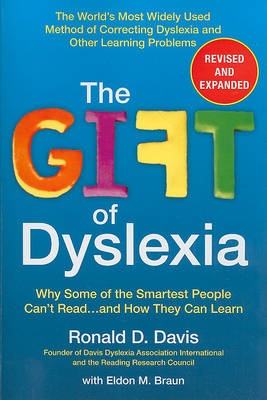
The Gift Inside the Problem
Here’s the point most people miss: the genius doesn’t happen in spite of dyslexia. It happens because of it.
All dyslexics share eight core abilities:
🟣 They can alter and create perceptions—the primary ability underlying everything else
🟣 They’re highly aware of their environment
🟣 They’re more curious than average
🟣 They think mainly in pictures, not words
🟣 They’re intuitive and insightful
🟣 They perceive multi-dimensionally, using all their senses
🟣 They experience thought as reality
🟣 They have vivid imaginations
Albert Einstein, Walt Disney, and Greg Louganis all had dyslexia. Their genius emerged from the exact same mental functions that made reading difficult. When these abilities go unvalidated or suppressed, dyslexics often hide their gifts and adopt workarounds. When they’re recognized and developed, they produce something Davis calls the gift of mastery—the ability to understand something so deeply, experientially, that you know how to do it intuitively.
Why Dyslexia Happens
Davis explains dyslexia as “the Mother of Learning Disabilities.” It shares a root cause with ADD/ADHD, autism, dyscalculia, dysgraphia, and hyperactivity. Each case is unique because dyslexia results from a combination of an underlying talent and environmental influences—particularly the stress and invalidation that happen during early school years.
Here’s how it works: dyslexic children are visual thinkers who excel at recognizing real objects. Their brains process multi-dimensional thinking faster than verbal thinking. But when they encounter printed symbols—letters and words—their talent becomes a liability. The symbols confuse them because the child’s brain tries to apply real-world visual perception to abstract marks on a page.
Disorientation triggers when confusion sets in. The stress of repeated failure compounds it. Over time, many dyslexics adopt mental tricks to hide their disability, damaging their self-esteem in the process.
The Path Forward: Three Proven Techniques
The revised and expanded edition of The Gift of Dyslexia includes updated methods for addressing the problem while preserving the gift. Davis details three concrete techniques:
Davis Orientation Counseling teaches dyslexics to turn off disorientation and refocus their perceptions. Two simple mental exercises allow them to overcome distorted perception and accurately recognize printed symbols.
Davis Symbol Mastery uses a stress-free, multi-sensory approach. Students model symbols and word concepts in clay—engaging their creativity while building accurate visual word recognition.
Davis Reading Exercises are three simple daily practices that improve reading fluency and comprehension.
The point isn’t to “fix” the dyslexic mind. It’s to teach dyslexics how their minds work and give them tools to use their talent without the distortion.
Who Needs This Book
If you’re a parent of a dyslexic child, you’ll find practical guidance and something more important: perspective. Your child isn’t broken. Their brain works the way Einstein’s did.
Teachers and facilitators gain insight into how dyslexic students actually think—not as a deficit model, but as a different processing style with real strengths.
Adults with dyslexia often report that this book validates their experience and explains struggles they never understood. Many discover they’ve been using the positive side of dyslexia in their work all along without realizing it.
And anyone who works with dyslexic individuals—whether as a supporter, educator, or therapist—benefits from Davis’ perspective. It shifts you from seeing a problem to seeing a talent that needs direction.
Get Started With Your Reading
Download: 5 Common Myths About Dyslexia — Before diving into the book, grab this free sheet. It clears up the misunderstandings that keep people stuck: dyslexia isn’t just about letter reversals, trying harder won’t fix it, and it’s not a lifelong disability to be managed. Understanding these myths shifts how you see dyslexia—and opens the door to seeing it as a gift.
Buy The Gift of Dyslexia Now — Available in paperback or listen to the audiobook on Audible.
ISBN: 978-0399535666
Publisher: Perigee Books, 2010
Author: Ronald D. Davis with Eldon M. Braun
December 6-7, 2025 | Free live online event
Your child isn’t broken. Traditional approaches weren’t made for their mind.
Two transformative days exploring autism through the Davis lens — discovering why your child experiences the world differently and how to support them without changing who they are.
Live attendance: FREE
Can’t make it live? Lifetime recordings: £12.99
Finally, answers that make sense
You’ve sat through countless meetings where professionals describe your child’s “deficits.” You’ve tried behavioral interventions that feel like forcing a square peg into a round hole. You’re exhausted from being told what your child can’t do.
What if we’ve been looking at autism all wrong?
Join families, educators, and professionals from 5 continents for a weekend that reframes everything. No deficit talk. No compliance training. Just breakthrough insights into how autistic minds actually work — and practical tools that honor that difference.
What you’ll Discover
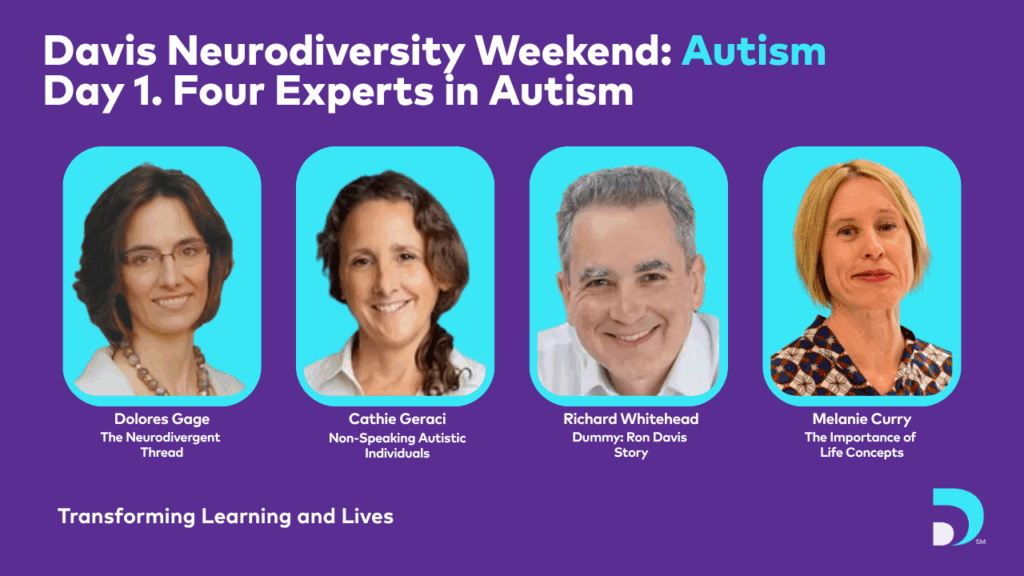
Saturday, December 6
5:45 PM GMT – Opening & Welcome
Featuring a personal message from Ron Davis, whose own autistic experience led to these revolutionary approaches.
6:00 PM – The Neurodivergent Thread with Dolores Gage
Why your child’s meltdowns, confusion, and sensory overwhelm all stem from the same source — and why that source is also their greatest strength.
7:30 PM – Non-Speaking Autistic Individuals with Cathie Geraci
Your non-speaking child has a rich inner world. Learn how Davis methods help restore calm and unlock communication without forcing speech.
9:00 PM – Dummy: Ron’s Story with Richard Whitehead
Preview Ron Davis’s autobiography — from non-speaking and “unreachable” to developing methods that have helped thousands worldwide.
10:30 PM – Missing Concepts and Individuation with Melanie Curry
Why your child might not recognize themselves in the mirror, understand “you” and “me,” or grasp cause and effect — and how to build these foundations gently.
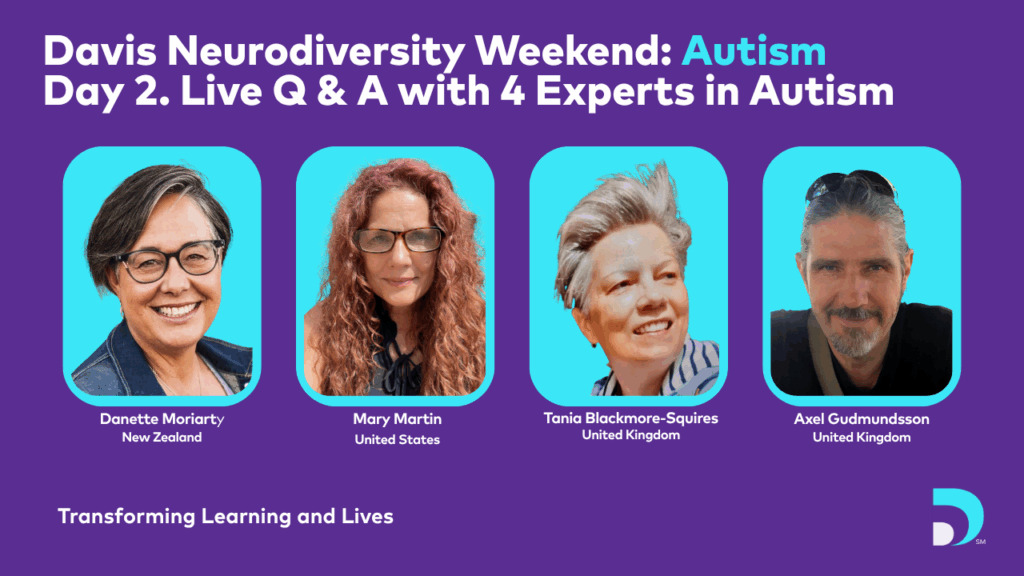
Sunday, December 7
7:30 PM GMT – Facilitator Panel + Your Questions Answered
Real families. Real breakthroughs. Davis facilitators share stories of transformation and answer your specific questions live.
Featuring: Tania Blackmore-Squires, Axel Gudmundsson, Mary Martin, Danette Moriarty
Who This Is For
Parents living with:
- Daily meltdowns you can’t predict or prevent
- A child who seems “unreachable” at times
- School calling constantly about behavior
- Therapy approaches that aren’t working
- Exhaustion from trying everything
You’ll leave with:
- Understanding of why your child’s brain works differently
- Practical tools you can use immediately
- Hope based on real success stories
- Connection with families who truly get it
- Clear next steps for your journey
Global event, local times
This event bridges time zones to unite our worldwide community:
Saturday Opening (5:45 PM GMT):
- London: 5:45 PM
- Paris/Berlin: 6:45 PM
- Johannesburg: 7:45 PM
- New York: 12:45 PM
- Los Angeles: 9:45 AM
- Auckland: 6:45 AM Sunday
- Sydney: 4:45 AM Sunday
Can’t make all sessions live? You can purchase lifetime recordings for £12.99.
Why Davis Is Different
We Don’t Try to “Fix” Autism
Your child’s different perception isn’t wrong — it’s just different. Davis methods work with how autistic minds naturally function.
Created BY Autistic Experience
Ron Davis was non-speaking until age 17. These aren’t theories developed in labs — they’re insights from lived experience.
Concepts, Not Compliance
Instead of behavior modification, we build the missing conceptual foundations that make the world make sense.
Tools That Last
Families report continued growth years after learning Davis methods. The tools grow with your child.
What others are saying about the Davis Autism Approach®
“The program didn’t try to change who he is. It gave him tools to understand and embrace himself – and that has made all the difference.” Louise, Mother of program participant
“I see how the stronger sense of who I am has allowed me to say no to what isn’t for me and say yes to what makes me happy. I no longer have to be reacting to everything happening around me. I can be centered and decide what is for me and what is not for me. I choose to respond rather than react. It feels so freeing.” Leigh, program participant
“Sophia was a frightened, fearful child who was withdrawn and living inside of herself. Since completing the program two years ago, she has become a typical young girl. She is two cycles away from completing her black belt in Taekwondo. She wants to work for Lucas films as an animator one day. Our lives are now ‘normal’ – we laugh as a family, we cry as a family, we encourage one another, we strengthen one another. We hadn’t experienced that before.” Mary, Mother of program participant
“I can’t believe how life-changing these concepts are. I use them all of the time in my life now – it is just so easy to take responsibility for things that had always seemed impossible before.” This person wished to remain anonymous
Common questions
Q: Is this for parents only?
A: While designed with parents in mind, educators, therapists, and autistic individuals would all benefit from these insights.
Q: My child was just diagnosed. Is this too advanced?
A: Perfect timing. Understanding the Davis perspective early saves years of inappropriate interventions.
Q: My child is an adult. Is it too late?
A: Never. Davis methods work across all ages. Many adults discover themselves through these concepts.
Q: What if I can only attend some sessions?
A: Register anyway. Each session stands alone with valuable insights. Recordings available for what you miss for only £12.99.
Q: How is this different from other autism seminars?
A: We don’t talk about deficits, disorders, or “fixing.” We explore how autistic perception works and how to support it.
A Personal Note from the Organizers
Every day, we see families exhausted from approaches that don’t work. Parents blamed for their child’s struggles. Children forced into boxes that don’t fit.
This weekend is different. It’s about understanding, not changing. Supporting, not suppressing. Hope based on real success, not false promises.
Your child’s autism isn’t a tragedy to overcome. It’s a different way of experiencing the world — one that includes incredible gifts alongside real challenges.
Join us to discover what becomes possible when we stop trying to “fix” and start trying to understand.
Organized By:
Davis UK & Ireland in partnership with Davis Autism International
Don’t Miss This
Two days that could change how you see your child — and how they see themselves.
December 6-7, 2025
Live: FREE
Recordings: £12.99
By Ronald D. Davis
Original article from the Dyslexic Reader 2002: The following is a description of an experiment he conducted in 1982 to prove to himself that disoriented perceptions are a natural function of the brain. This understanding of how the use of a natural brain function not only produces the symptoms of dyslexia, but also the many talents dyslexic thinkers can exhibit, serves as one of the foundations of Davis Mastery for Dyslexia®. It explains the tools which allow dyslexic thinkers to intentionally control the distorted perceptions that are a product of disorientation—to both eliminate a learning disability and to enhance their talents.
Setting the stage: 1982
In 1982, after my colleagues and I had arrived at a basic, rudimentary understanding of what had to be done to correct dyslexia, we offered a program for doing so to the public. The program was producing spectacular results, and we gathered a great deal of empirical evidence to support it. But the program and I were being criticized and ridiculed by the established authorities on dyslexia. This was because the developmental model for dyslexia was such a major departure from the structural model (brain damage or malfunction) that was accepted at the time. In addition, I lacked any formal training or credential in the field, so I was quickly branded a kook or snake oil salesman.
I searched in vain for anything that would support the concept that distortion in perception was at the root of dyslexia symptoms. I couldn’t even find a simple explanation of perceptual distortion, why it happened, how it happened, or what it was called.
The motivation
My primary motivation was to establish that dyslexia was not the result of brain damage or malfunction. I wanted to find a way to prove that all of the symptoms of dyslexia could be produced by a normal brain functioning naturally. I felt that if I could make a link between the perceptual distortions, which even non-dyslexics experience, and dyslexia symptoms, it would prove that the symptoms of dyslexia were not evidence of brain damage or malfunction. I didn’t know where to begin.
The breakthrough moment
Then one day I was driving into the office. We had just had about two weeks of cold, gray, rainy weather.
That morning it was warm, bright, and sunny. I wanted to play hooky from work and go for a drive in the redwood forest. I was stopped at a stoplight, with my mind already in the redwoods, when suddenly I felt that I was going to bump into the car in front of me. I naturally pushed harder and harder on the brake but I wasn’t stopping. Suddenly I realized, it’s not me moving, it’s the other car rolling backward towards me! A toot of my horn prevented a bump, but my mind began to race. This firsthand experience of the phenomenon (distorted sensory perceptions) I had been talking about for months caused a shift in my perspective. If I could reproduce this same effect in a controlled situation, I might be able to prove my theory.
The experiment begins
That day I set up an experiment. The equipment was an old 33-1/3 speed record player, standing on its side. Attached to the turn table was a large cardboard disk with a spiral painted on it. With a foot switch so the device could be turned on and off without using a hand, a stop watch, a tape recorder, and a clipboard, I was ready to explore perceptual distortion. I was the first test subject. I sat in front of the disk looking at the center of the spiral. A press of my foot, and the disk began to spin. In less than five seconds I felt the motion. The speed of the disk was so fast that the sense of motion was like flying down an endless tunnel.
The goal of the experiment was to produce dyslexia symptoms in a non- dyslexic brain. But before that could be established, the equipment had to produce dyslexic symptoms in a dyslexic brain. Based on the developmental model, the symptoms of dyslexia came from distortions in the senses. The senses most affected were vision, hearing, balance, motion, and time.

Phase one: Vision
The first thing I noticed performing the experiment on myself was that just before the feeling of movement began, the speed of the spinning disk appeared to slow down. This indicated that not only was my sense of motion distorting, but also my sense of vision.
Phase two: Balance
The second phase of the experiment was to stand in front of the disk balancing on one foot, turn the disk on, and try to maintain balance. I don’t recommend doing this without an assistant to turn the disk on for you and, more importantly, to catch you when you begin to fall–because you will fall over backwards. The spinning spiral definitely distorted the sense of balance.
Phase three: Time
The third phase was to sit in front of the stationary disk with a stopwatch in hand. While looking at the center of the spiral, I tried to estimate the passage of fifteen seconds by clicking the stopwatch on, and when I thought fifteen seconds had elapsed, I clicked it off. In five attempts I was never more than three seconds off. The next part was to start the disk spinning, and try the same thing. In five attempts I never got closer than five seconds, and twice I was more than ten seconds off. My sense of time was definitely distorting.
Phase four: Hearing
The fourth phase was to turn on the tape recorder, spin the disk, and after the feeling of motion began, have an assistant say something to me, and repeat back what I heard. We used nursery rhymes like, “Sally sells sea shells at the sea shore.” Only the assistant would deliberately alter the words, like, “Sally tells sea snails at the sea shore.” Or, “Sally sells seashores to seahorses.” I could not hear exactly what the assistant said, and the proof was on the tape.
Testing a Hundred People
So with less than $100 of equipment, I demonstrated for myself that my brain distorted the senses of vision, hearing, balance, motion, and time. The experiment produced dyslexic symptoms in a dyslexic brain. Now I was ready to try the same thing on a non-dyslexic brain. I decided to put one hundred people through the steps of the experiment. I wouldn’t even attempt to pre- determine whether or not they were dyslexic. I wanted a cross section of the population.
I started doing the experiment with anyone who was willing to sit in front of the spinning disk. I soon discovered that I needed another piece of equipment – a plastic-lined waste can. I also discovered that I needed to change the protocol. At first I let others observe someone going through the experiment. Their observations influenced their own experience. So observation was permitted only after having had the experience.
Some people were made too nauseous by the spinning disk to complete all four phases of the experiment. But there was perceptual distortion in the phases they did complete. And everyone who completed the series experienced distorted vision, hearing, balance, motion, and time. Age, intelligence, education, gender, race, etc. didn’t matter–the results were consistent.
Then one evening a young woman, the forty-eighth test subject, was sitting in front of the spinning disk. She sat there on the verge of vomiting for about three minutes, then fell to the floor and had a grand mal seizure. The unexpected event scared me; it terrified her. She had never had a seizure before, and I had never seen one that up close and personal. I felt responsible for making it happen.
I had satisfied my own curiosity. I had nearly fifty test results, all of which confirmed my theory. After all, I didn’t have a graduate degree hanging in the balance. I concluded that I had proven my point, so the hundred person experiment ended at only forty-eight.
Talents which can be enhanced by disoriented perceptions
- Spatial awareness and design
- Strategic planning and problem-solving
- Mechanical and engineering work
- Creative fields like art, music, and drama
- Athletics and piloting
- Inventing and storytelling
Thus, the goal of Davis Orientation Counseling is not the elimination of disorientation, but the ability to consciously control it when it acts as a barrier to reading, writing, doing arithmetic, or succeeding in a traditional educational setting.
Ready to learn more? Get in touch with our team to discuss your questions about dyslexia, or explore how the Davis® Mastery for Dyslexia can help you or your child thrive.
Find a Facilitator
Guest post by Tracy Doyle, Davis Facilitator
Math can feel like a foreign language, especially for learners whose brilliance shines in pictures, spatial thinking, and creativity. It isn’t that these kids can’t learn—it’s that the traditional way of teaching math often doesn’t align with how their minds naturally process information.
For students with dyslexia or dyscalculia, the symbols, sequences, and linguistic twists in math can create confusion rather than clarity. Dyslexic learners, for instance, often excel at three-dimensional or spatial reasoning but struggle with rote memory, symbols, and step-by-step logic—exactly the areas where so much of math typically lives.
That’s why the Davis® Mastery for Math Program offers such a profound shift. It meets learners where they are: visual, kinesthetic, big-picture thinkers, and invites them into math in a way that genuinely makes sense.
Natalie’s Transformation
When Natalie began her program, she was clear on what she wanted:
- To feel more confident
- To improve her math skills
- To ease the anxiety that often crept in during learning
And she did blossom. Natalie learned to work with her picture-thinking mind instead of fighting it. Concepts that once felt daunting—like addition, place value, fractions, and negative numbers—began to make sense in a whole new way.
Her measurable progress tells the story:
- Basic concepts: from grade equivalent 3.1 to 4.8
- Operations: from grade equivalent K to 3.3
- Applications: from grade equivalent 2.6 to 3.3
Through hands-on tools, clay modeling, and strategies for regulating focus, energy, and emotions, Natalie didn’t just grow mathematically—she built a stronger connection to herself. She walked away not only with math tools but with a deeper understanding of how her brilliant mind works. That’s not just change; that’s empowerment.

How This Approach Connects with What We Know
Visual, multisensory learning builds real understanding. Research and experience show that visual and manipulative strategies—like using beads, clay models, or pictorial overviews—help bridge abstract math concepts. When learners see and touch the math, it becomes anchored, meaningful, and memorable.
Math anxiety often stems from language and symbol confusion. Words like “from,” “by,” and other everyday words in math problems can trigger confusion for picture thinkers. They may recognize the words but can’t translate them into picture meaning, and that’s where true understanding falls apart.
At the root of math struggles lies disorientation, not laziness. Dyscalculia, the math-side counterpart to dyslexia, often stems from distorted perception. When you can’t intuitively grasp numbers or procedures because you’re disoriented, math becomes a maze. Approaches that address that orientation directly can be life-changing.
Natalie’s Story in the Bigger Picture
She’s not alone. Across the Dyslexia.com blog, you’ll find stories of students overwhelmed by numbers, math terms, or symbols, only to find joy and clarity when learning finally meets how they think.
This isn’t just healing academic wounds—it’s reigniting curiosity, confidence, and a sense of belonging in math.
If math has ever been a source of frustration, fear, or disconnection for your child, it doesn’t have to stay that way. The Davis® Mastery for Math Program offers an approach that changes everything because it starts with understanding how your child learns, not how we’ve traditionally taught.
Have questions about the Davis® Mastery for Math?
Contact us
Fout: Contact formulier niet gevonden.
Guest post by Sue Hall, Licensed Davis Facilitator, TedX Speaker, Author, Film Writer and gifted dyslexic
I was beyond excited to receive an invitation to deliver my first Keynote talk at the Edmonton Family Literacy Conference on October 8, 2025.
Even better?
After lunch, they were screening our documentary WHO KNEW Dyslexia is a Way of Thinking.

I love presenting at conferences and professional development sessions because of the unknown—those attendees’ ‘aha’ moments, the nods and smiles when I voice what they already know to be true.
When I share the unique ability of picture thinkers to alter perception, which leads to talents in the 3D world, and then explain how it works against us in the 2D world of print… when I explain that picture thinkers are image-based thinkers rather than sound thinkers and phonics just isn’t the way we learn to read… and when I share that picture thinkers need pictures to think with, and no image means no thinking—the overwhelming reaction is always the same: “I had no idea people thought like that.” Hence the title of the film.
The conference theme was to shift perception and disrupt. I opened by saying, “I promise to disrupt!” That part was easy.
After my talk and the film screening, there were plenty of questions and a great deal of emotion. I passed a notebook around, asking attendees to write their email if they wanted more details. The next morning I looked at the notebook… oh my… so many entries. It was affirming and heartwarming.
Here’s what happened next: A considerable number of attendees from Aboriginal and Metis communities wanted to book another talk, a professional development session, a film screening. I had shared that challenges can be significantly reduced with Davis Learning Strategies for K-3 teachers and The Whole Dyslexic Society’s pilot DLS for Early Years. The very next day, I heard from a province-wide association working with 3-5 year olds and a school district wanting to change their remediation methods.
I write this on Canadian Thanksgiving Day, and I could not be more grateful—for Ron Davis’s wisdom, for my calling as a Facilitator, for the invitations to enlighten educators of individuals from 3 to 80+. The message is clear: everyone is able to learn if they are taught in the way they were born to learn. They are definitely not learning disabled. And now way more educators know this and can share their ‘aha’ moments. Yay!
And there’s more exciting news: The WHO KNEW film director submitted the documentary to film festivals, and we just heard it’s been accepted to the Los Angeles Women in Film Festival (November 13-16, 2025)! She was beyond excited, too. Who knows what that will lead to? We just know it will be exciting and inspiring.
Want to experience your own ‘aha’ moment? Learn about Davis workshops and programs that can transform how you or your loved ones learn. Head to our solutions page.
Watch the documentary: Discover the full WHO KNEW story
Have questions about any of our Davis Programs or Workshops?
Complete the form below
Fout: Contact formulier niet gevonden.
Guest post by Stephen Martin, New Zealand
When we talk about neurodiversity, most people want clean labels. You’re “dyslexic” or you’ve got “ADHD” or maybe someone says you’re “on the spectrum.”
But for so many of us, it’s not one neat label. It’s a cocktail.
For me, dyslexia was the first word that gave my challenges a name. Reading from the board at school was nearly impossible, and that’s what got picked up. But fast-forward 20 years and suddenly I’m sitting in a doctor’s office, learning I also have ADHD. And when I really reflect, I know I carry traits from autism too — a love of routine, moments of social struggle.
This is the truth for so many people: we are not “one thing.” We’re a unique mix of traits, strengths, and challenges. It’s why one-size-fits-all solutions rarely work.

Why it feels like a cocktail
Each piece of neurodiversity adds its own flavour.
- Dyslexia gives us visual thinking, fast pattern recognition, but also the frustration of words not sticking the way they should.
- ADHD brings the kerosene, hyperactivity, dopamine-seeking, the racing energy that can be both gift and chaos.
- Autism traits can add a deep need for structure, a sensitivity to noise or light, or the feeling that social rules are written in a language we never got taught.
- Plus all the rest…
Put them together and you’ve got a cocktail that changes flavour depending on the day. Some days it’s a mojito, sharp, refreshing, full of energy. Other days it’s a hangover in a glass.
The Davis way of looking at it
What I love about the Davis Method is it doesn’t just chase symptoms. It asks: what’s the trigger?
Ron Davis understood that disorientation in the mind’s eye is at the core of dyslexia. That our brains are trying to see 3D meaning in 2D symbols, which leads to confusion. His approach is experiential, clay modelling, visualisation, life concepts. Instead of memorising, you build understanding with your hands and senses.
And here’s the powerful bit: this approach doesn’t stop with dyslexia.
The same life concepts work has helped people with ADHD, autism, dyscalculia, and more. Because at the root, all of these brains struggle with abstract concepts, time, cause and effect, or holding onto focus. Davis methods give those concepts a shape and a place in the mind.
A retrospective shift
Looking back, I wish more of us were told the truth earlier. That dyslexia was never just about spelling. That ADHD wasn’t just about being distracted. That autism wasn’t only about “social skills.”
They’re all connected. They all overlap. They’re different branches of the same neurodiverse tree.
And if we’re honest, so many adults only discover this cocktail later in life. That’s when the grief hits, what could my life have been like if I’d known at 20, not 40?
But awareness also brings possibility.
Why Davis makes a difference
The Davis Method isn’t a quick pill. It’s a way of rewiring how you see the world. For me, doing their Concepts for Life course was like having puzzle pieces finally slot into place. Suddenly time made sense. Cause and effect clicked. I wasn’t broken, my brain just needed a different way of learning.
That’s why I believe Davis programs can support across the board, dyslexia, ADHD, autism, dyscalculia, dyspraxia. Because they go to the root. They help us master the building blocks of thought in the way our brains actually work.
And when you shift the foundation, everything else in life gets lighter.
Final thought
So if you see yourself in this cocktail, a bit of ADHD, some dyslexia, maybe a splash of autism, know that you’re not alone. You’re not collecting diagnoses like Pokémon. You’re simply wired differently.
And that’s exactly why methods like Davis can make such a massive difference. They don’t try to pour your cocktail into someone else’s glass. They help you understand the mix you already have and use it to build a life that finally makes sense.
When The Cocktail Needs More Than Reading Support
If you recognize yourself in Stephen’s description – carrying ADHD, dyslexia, autism traits, or other neurodivergent characteristics – reading skills alone won’t solve everything.
The Davis Concepts for Life® program addresses the abstract concepts that all neurodivergent brains struggle with: time, cause and effect, motivation, responsibility, order, and relationships.
Why Concepts Matter
Stephen mentions how the Davis approach “doesn’t just chase symptoms” but asks “what’s the trigger?” The program uses clay modeling to make abstract concepts concrete, giving them shape and place in your mind through hands-on creation and real-world exploration.
You master fundamental cognitive concepts like cause and effect, time, order and disorder, motivation, and responsibility through plastilina clay modeling, then explore how these concepts work in your daily environment. You can read more about this in our blog post: A guide to understanding abstract life concepts.
What Changes
People who complete the program report increased self-awareness, stronger sense of self, improved executive functioning, better stress management, and enhanced ability to form and maintain relationships.
The program helps with executive functioning skills, stress, anxiety, focus, self-regulation, and behavior management – particularly beneficial for those struggling with forming and maintaining positive relationships.
The Approach
Programs run 50-70 hours, delivered one-on-one with a trained facilitator, either in-person or online. The flexible schedule spreads across several weeks, tailored to your specific needs and goals. Find out more about the Davis Concepts for Life program.
Unlike talk therapy, this uses creativity and experiential learning. You’re not memorizing concepts – you’re building them with your hands, then experiencing them in your life.
This Works Across The Cocktail
The program supports individuals with ADHD, autism, dyscalculia, and other neurodivergent profiles through hands-on methods that align with unique learning styles, no formal diagnosis is required.
As Stephen says: when you shift the foundation, everything else in life gets lighter.
Find a Licensed Davis® Facilitator in your area or learn more about the program here. If you are unsure whether the Davis® Concepts for Life program is right for you or someone you support, fill out the form below for a free Discovery Call – one of our team will speak with you about your specific needs.
Fout: Contact formulier niet gevonden.
About the author
Stephen Martin, based in New Zealand, is the creator of The Truth About Dyslexia podcast, with nearly a million downloads worldwide. Diagnosed with dyslexia as a child and ADHD as an adult, Stephen shares raw, real stories about the neurodiverse journey and what it takes to thrive.
He has worked with the Davis Method himself and is passionate about showing adults that dyslexia, ADHD, and autism are not just challenges, but part of a powerful mix of strengths.
Learn more about his dyslexia in adults podcast here or help him with his ADHD Sleep project survey if you have ADHD.

Guest Post by Stephen Martin, New Zealand
When I was first found to have dyslexia, I was about ten years old.
It wasn’t because I told my mum that words were moving on the page and in fact, that was never really my issue.
It was because I couldn’t copy words down off the blackboard and onto a piece of paper without getting a splitting headache.
I’d look up, then down, and the letters just wouldn’t stay still long enough to make sense.
It was exhausting.
That was the big sign for me that something wasn’t quite right.
Sure, I had spelling challenges too, but back then it was often brushed off as being “lazy” or “not trying hard enough.”
Luckily, someone saw past that and got me tested.
And that’s what’s wild because for so many of us, dyslexia doesn’t show up in just one way.
It’s not as simple as letters moving on a page.
The truth is, the visual side of dyslexia that most people think about, the swirling text, the jumping words and that’s only a small part of the story.
What often goes unseen is how dyslexia affects comprehension.
The hidden side of dyslexia
If you’ve ever read the same page three times and still couldn’t tell someone what it said, you’ll get this.
It’s like the words go in, but they don’t stick.
You might even start blaming yourself and thinking you’re lazy, distracted, or not focusing enough.
But you are focusing. Your brain’s just working differently.
People with dyslexia often think in pictures and stories, not words.
When we read, we don’t automatically “hear” the words in our heads like others do.
Instead, we translate them into visuals and into little movies.
That translation takes mental energy.
And by the time we’ve converted the words into meaning, we’re already tired.
So when someone asks, “What did that paragraph mean?” we draw a blank.
Not because we didn’t read it, but because our brain was busy doing the hard work behind the scenes just to make sense of it.

Why comprehension drains dyslexic brains
Reading isn’t something our brains evolved to do naturally and it’s a learned skill.
Most people’s brains eventually automate that decoding process.
But for many dyslexics, reading and comprehension use different neural pathways that take more effort to fire up.
It’s like running a race with a backpack full of bricks – you still finish, but it takes way more energy.
By the time you’ve decoded the words, you’ve got less energy left for understanding them.
That’s why it’s easy to reach the end of a page and realise you have no idea what you just read.
And it’s not just reading.
The same thing can happen when we listen.
When listening feels like reading
Ever listened to a podcast or an audiobook and found your mind wandering halfway through?
Then you suddenly realise you’ve missed ten minutes but can’t remember zoning out?
That’s the comprehension gap at work.
We hear the words, but they don’t all connect.
Our brains crave context think images, emotion, and stories to anchor the meaning.
That’s why dyslexic minds remember stories perfectly, but not the fine details.
Ask us what a book was about, and we might struggle.
Ask us what the main character went through, or what the scene looked like, we can tell you in vivid colour.
We don’t just remember information.
We remember experiences.
The cost of constant confusion
This comprehension challenge doesn’t just live in classrooms.
It follows us into adult life and into work meetings, emails, conversations, and relationships.
It can make you doubt yourself.
One moment you feel sharp, the next you’re lost.
And when you can’t quite grasp what’s being said, you start compensating, nodding along, pretending to understand, then piecing it together later.
That takes a huge emotional toll.
It’s why so many dyslexic adults describe feeling like they’re always behind and not because they can’t keep up, but because their brains are working twice as hard just to stay level.
But once you understand that comprehension is part of your dyslexia and not a personal flaw, you can start to work with it, not against it.
Three things that help when comprehension is the struggle
1. Use your picture brain on purpose
If your mind thinks in pictures, use it.
When you read something important, pause and see it.
Create a mini movie in your head.
The Davis® Mastery for Dyslexia actually teaches this – how to turn abstract words into real mental models so you understand what you read, not just recognise the words.
2. Slow down – speed isn’t understanding
We’ve been trained to read fast, as if speed equals intelligence.
But for dyslexic thinkers, comprehension lives in the pauses.
Slow reading lets your brain catch up and connect the visuals and that’s where meaning sticks.
3. Re-tell what you’ve read or heard
After reading or listening, try explaining it in your own words.
You don’t need to repeat it perfectly, just tell it like a story.
That act of storytelling helps your brain connect the language to your natural way of thinking – through pictures, emotion, and flow.
The bigger picture
Dyslexia isn’t just about reading and spelling.
It’s about how we make sense of the world.
We might not remember every sentence, but we see the big picture faster than most.
We connect patterns. We sense emotion. We understand people.
That’s comprehension too, just a different kind.
So if you’ve ever read a book and thought, “None of that stuck,” or listened to a talk and wondered where your brain went – take a breath.
You’re not broken.
Your brain just processes meaning in a way schools were never designed to measure.
And when you learn to work with that wiring – to use pictures, stories, and your natural way of thinking – comprehension finally starts to click.
Looking for help for Dyslexia? The Davis® Mastery for Dyslexia Program is suitable for all ages – yes, adults included!
If Stephen’s experience sounds familiar, you’re not alone.
The comprehension struggles he describes – reading without retaining, listening without connecting, constantly working twice as hard just to stay level – affect thousands of dyslexic adults and children.
The Davis® Mastery for Dyslexia program works with your picture-thinking brain, not against it. Through clay-based Symbol Mastery and orientation techniques, you learn to eliminate the confusion that causes words to slip away.
Learn more about the program here or find a Licensed Davis® Facilitator in your area.
If you are unsure whether the The Davis® Mastery for Dyslexia program is right for you or someone you support, fill out the form below – one of our team will speak with you about your specific needs.
Fout: Contact formulier niet gevonden.
About the author
Stephen Martin, based in New Zealand, is the creator of The Truth About Dyslexia podcast, with nearly a million downloads worldwide. Diagnosed with dyslexia as a child and ADHD as an adult, Stephen shares raw, real stories about the neurodiverse journey and what it takes to thrive. He has worked with the Davis Method himself and is passionate about showing adults that dyslexia, ADHD, and autism are not just challenges, but part of a powerful mix of strengths. Find out about his Dyslexia & ADHD in adults podcast here or his new Added Sleep Supplement here.
Libraries across the country are recognizing the power of neurodiversity programming to create inclusive spaces for all learners. This summer, our own Nadine Schumont demonstrated this commitment when she was featured at Stratford Public Library’s “Voices of the World” program on July 23.
From Client Inspiration to Community Education
Nadine shared her book Owen’s Rainbow Mind: A Mysterious Summer of Discovery — a story inspired by her client Owen and his younger brother Caleb. The book follows their magical summer adventure sparked by a mysterious map. Guided by a wise old owl, Owen learns to embrace his picture-thinking mind and use his unique strengths.
The story reflects the core philosophy behind the Davis Method: thinking differently isn’t a deficit — it’s a gift.
Interactive Learning That Makes a Difference
During the library event, participants engaged in interactive activities designed to help them step into Owen’s world. This hands-on approach mirrors the Davis Method’s signature clay-based learning techniques that help neurodivergent learners master concepts through tactile, visual experiences.
Recent research shows that libraries nationwide are developing programming specifically for neurodivergent youth and their families, creating sensory-friendly environments and autism-inclusive early literacy services. These initiatives recognize that different minds require different approaches to learning.
The Picture-Thinking Advantage
Neurodivergent individuals, including those with dyslexia, ADHD, and autism, tend to think non-verbally using mentally generated sensory impressions that can be visual, tactile, kinesthetic, or auditory. They are imaginative, creative, empathetic, and often solve problems by looking at the whole picture rather than working step-by-step.
This thinking style, which can seem challenging in traditional learning environments, becomes a superpower when properly understood and supported.
Beyond Accommodation: True Understanding
The Davis Method doesn’t rely on accommodations like special devices or medication. Instead, it teaches learners to:
- Master the orientation skills that eliminate confusion
- Create personal meaning for abstract concepts
- Use their natural picture-thinking abilities as learning tools
- Build permanent understanding rather than temporary fixes
The method is based on mastery — clients receive tools that enable them to master symbols and concepts that are foundations of learning and life. Once mastered, information is understood inherently and can transfer across situations and experiences.
Why Stories Matter
Owen’s story resonates because it shows a neurodivergent child discovering that being different is something to celebrate, not hide. Current research emphasizes the importance of books that promote respect and understanding for neurodiverse communities, advocating for positive learning environments that strive to make accommodations for all.
This aligns with our mission to help families understand that neurodiversity brings gifts alongside challenges.
Growing Recognition
Libraries are increasingly offering specialized programs for neurodivergent individuals, including sensory story times, neurodiversity clubs, and programming designed specifically for different learning styles. These programs recognize that traditional approaches don’t work for everyone.
The “Voices of the World” program at Stratford Public Library represents this growing awareness. By featuring stories like Owen’s, libraries help normalize different ways of thinking and learning.
The Davis Difference
As a Licensed Davis® Dyslexia Facilitator and Davis Autism Approach® Facilitator, Nadine brings unique insight to neurodiversity education. Nadine brings unique insight to neurodiversity education. Having completed the Davis® Program herself in 2018 after years of undiagnosed ADHD and dyslexia, she understands firsthand how life-changing this approach can be.
The Davis Method recognizes that dyslexic and many neurodivergent individuals are picture thinkers who experience perceptual disorientations in the senses of time, vision, hearing, and balance coordination. Nadine’s personal experience with these challenges allows her to connect with clients on a deeper level and guide them through their own transformation.
Rather than viewing these differences as problems to fix, the Davis approach teaches individuals to:
- Understand their unique learning style
- Develop self-regulation tools
- Master concepts through hands-on, creative methods
- Build confidence in their abilities
Looking Forward
Events like Nadine’s library presentation demonstrate the importance of community education about neurodiversity. When we share stories that celebrate different minds, we create a culture where all learners can thrive.
Whether you’re a parent, educator, or community member, understanding neurodiversity helps create more inclusive environments for everyone. After all, the world needs all kinds of minds — including rainbow minds like Owen’s.
Connect with Nadine here or find a Licensed Davis® Facilitator in you area here
Programs for Neurodivergent adults and those over the age of 8
Programs for Neurodivergent under the age of 8
Contact us
Fout: Contact formulier niet gevonden.
Math teachers routinely use multiple words for the same concept — add, plus, added to — switching between them naturally during lessons. But for dyslexic children, this seemingly simple language flexibility can create profound confusion.
A recent planning meeting with math teacher Geoffrey Ashiono highlighted this challenge and sparked a discussion about how Davis Method clay modeling can provide clarity where traditional teaching methods fall short.
The Language Confusion Problem
Math teachers naturally use synonymous terms interchangeably:
- Add or plus or added to
- Subtract or minus or take away
- Multiply or times or by
- Divide or share
While teachers understand these words mean the same thing, dyslexic children often don’t. When a teacher says “add” one minute, then “plus” the next, then “added to,” confusion sets in. Do they mean the same thing or different operations?
This uncertainty undermines mathematical confidence before calculations even begin.
Picture-Thinking Needs Context
Dyslexic learners are primarily picture-thinkers who benefit from concrete, visual representations. They need context and narrative to connect with learning — something that makes abstract concepts tangible and relatable.
Clay modeling provides exactly this foundation.
A Real Example: Watermelons and Addition
One 8-year-old learner came from a farm where they grew watermelons. The child loved watermelon, so his context for learning became watermelons. He also wanted to learn the meaning of “equal” — if his sister had three melons, he definitely wanted three melons too!
This personal connection became the foundation for understanding mathematical concepts.
Building Understanding Through Clay
First, establish the core concept:
Addition means “putting together” two or more quantities. When you add, you join something to something else so there is more. The “more” is crucial — it helps children realize the answer should always be bigger than the starting number.
Next, connect multiple terms to one meaning:
Using clay models, children learn that “add” has the same meaning as “plus” and that both connect to the + symbol. This gives certainty to children listening to mathematical language.
How the Clay Model Works
The child creates a visual representation using clay balls to represent quantities. For the equation 2 + 3 = 5:
Reading left to right: 2 plus 3 equals 5 Alternative reading: 3 added to 2 equals 5
Both phrasings use the same clay model and the same + symbol, making the connection clear.
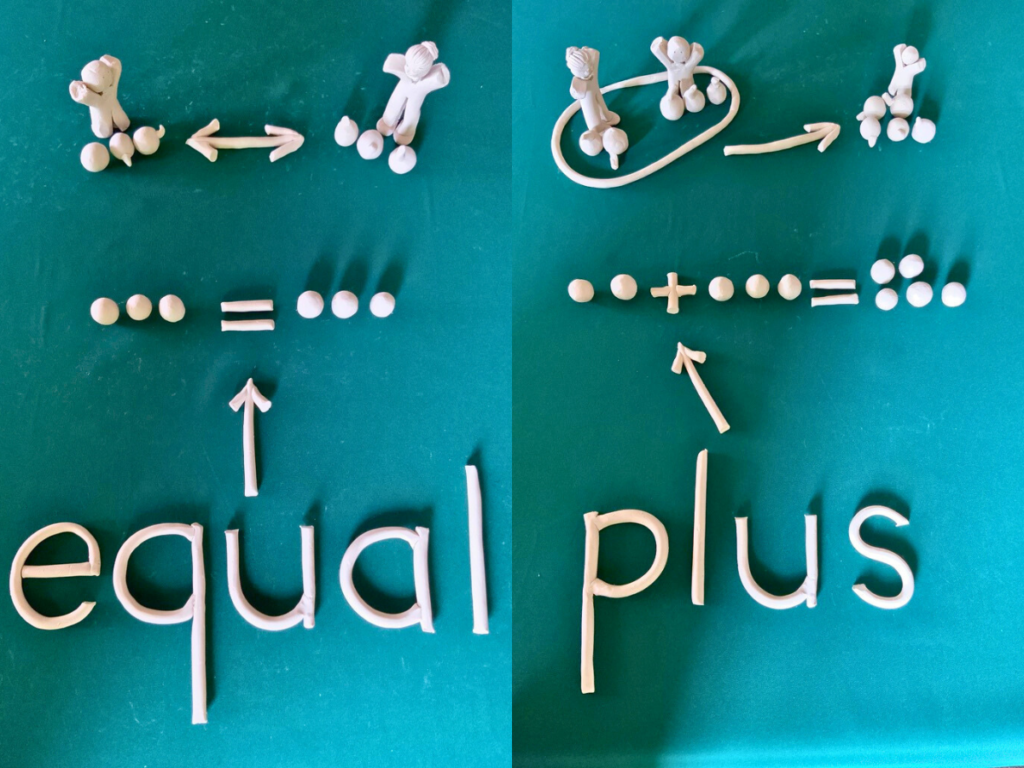
Connecting Symbols to Meaning
Mathematical symbols often confuse visual-spatial learners. Clay modeling addresses this by making abstract symbols concrete:
Where is the meaning of plus? → Point to the + sign Where is the meaning of add? → Point to the + sign
The physical model shows that different words point to the same symbol and concept.
The Summary Step
After creating the model, the learner takes control. They guide others through a summary of their clay work, pointing at the model while explaining the meaning. This active teaching role reinforces understanding and builds confidence.
Why This Approach Works
Picture-thinking learners need:
- Concrete representations of abstract concepts
- Personal context that makes learning relatable
- Multi-sensory engagement through hands-on creation
- Clear connections between different terms and symbols
- Active participation in explaining their understanding
Clay modeling provides all these elements while addressing the specific challenge of mathematical language confusion.
Beyond Addition
This approach works for all mathematical operations. Whether working with subtraction (minus, take away), multiplication (times, by), or division (divide, share), clay models help dyslexic learners understand that multiple words can represent the same mathematical concept.
The key is providing concrete, visual anchors for abstract mathematical language.
A Foundation for Success
When dyslexic children understand that mathematical terms are simply different names for the same operations, confusion decreases and confidence grows. They can focus on learning mathematics rather than decoding conflicting language.
This clarity becomes the foundation for mathematical success, allowing picture-thinking learners to engage with math using their natural strengths rather than struggling against language barriers.
Learn more about the Davis® Mastery for Dyslexia here, connect with Claire or find a Davis® Facilitator in your area.
Have questions? Contact us
Fout: Contact formulier niet gevonden.
When children consistently resist authority, refuse demands, or seem to oppose everything, parents and professionals often turn to labels like Oppositional Defiant Disorder (ODD) and Pathological Demand Avoidance (PDA). But what if these behaviors aren’t about defiance at all?
As both a parent of a child with ODD and PDA traits and a Davis facilitator, I’ve witnessed the complexity of supporting these children firsthand. This dual perspective has given me professional insight and deeply personal understanding of the daily challenges these families face.

The Hidden Crisis for Families
Parents of children with ODD and PDA often live in constant crisis mode, even when they don’t recognize it. The relentless cycle of conflict, avoidance, and defiance leaves families feeling powerless, isolated, and emotionally drained.
This chronic stress creates a psychological burden that:
- Undermines parental confidence
- Erodes sense of identity and stability
- Creates anticipatory anxiety around daily interactions
- Affects the entire family system
Parents function in survival mode without realizing it. This profoundly impacts their ability to support their child, themselves, and their wider family. Any effective support must address both the child’s missing conceptual foundations and the parents’ fragile emotional state.
Reframing Defiance: A Davis Perspective
The Davis approach offers a fundamental shift in understanding. Rather than viewing defiance as deliberate misbehavior, we recognize it as a child’s attempt to regain stability and control in an unpredictable world.
This reframes ODD from “willful bad behavior” to a protective strategy for children lacking internal anchors.
How the Mechanism Works
From a Davis perspective, ODD and PDA behaviors stem from disorientation — when children lack secure internal anchors like sequencing, cause and effect, time, or consequence. Without these concepts, the world feels chaotic and unpredictable, producing stress, anxiety, and helplessness.
To cope, many children create an imaginary system of control. In this inner world:
- Outcomes are predictable
- The child has agency
- They decide, protect, and control
This provides temporary stability.
The conflict emerges when external reality strips away that control. Adults set necessary rules and limits, but for children without strong cause/effect concepts, these boundaries feel arbitrary. Adult authority collides with the child’s internal script: “I am the one who decides.”
Defiance becomes self-preservation. Saying “no,” refusing, or arguing aren’t simply oppositional acts — they’re strategies to protect the inner world and ward off helplessness.
The Self-Reinforcing Cycle
This often creates a destructive pattern:
- Adults respond with sanctions or punitive language
- Children experience consequences as unjust (unable to link action and outcome)
- This confirms their belief that external reality is unfair
- Children retreat deeper into imaginary control
- Oppositional behavior strengthens
From the Davis perspective, this isn’t willful misbehavior but a protective strategy for managing overwhelming uncertainty.
Missing Conceptual Foundations
Children with ODD and PDA aren’t “choosing” defiance. Their behavior reflects gaps in essential life concepts. When these concepts are missing, rules feel random, consequences seem unfair, and relationships break down.
Key concepts that often play a role:
Change – Without it, transitions feel threatening; defiance protects against perceived instability
Cause/Effect/Consequence – Missing links make outcomes feel arbitrary; sanctions are experienced as injustice rather than learning
Before & After/Time – Weak sequencing makes requests like “homework first, then play” seem random; poor time sense fuels frustration
Order/Disorder – Structured environments feel arbitrary; chaotic ones overwhelming. Both provoke resistance
Fear – Without recognizing fear, defensive anger masks underlying anxiety
Responsibility/Control – Weakness makes self-regulation difficult; children feel controlled by others but unable to control themselves
Intention/Motivation – Misinterpreting motives creates mistrust; unclear motivation makes tasks meaningless
Energy – Difficulty pacing leads to swings between hyperactivity and exhaustion
Relationship/Trust/Agree/Rules/Belief – Missing these makes cooperation hard, rules feel unsafe, and agreement seems like submission
When these foundations are underdeveloped, the world becomes unpredictable and threatening.
Practical Davis Support Approaches
1. Building Predictability
Why it helps: Reduces anxiety around change and order
Tools: Orientation; Concept Mastery of Change, Time, Sequence and Order
Examples: Visual timetables; model “before” and “after”; practice transitions with Release and Ting to reduce stress
2. Strengthening Cause/Effect and Consequence
Why it helps: Helps children link behavior to outcomes, reducing feelings of unfairness
Tools: Concept Mastery of Cause, Effect, Consequence
Examples: Use natural demonstrations (plants growing, baking, switches) instead of punitive systems; reinforce logical links (spill water → wipe it up).
3. Developing Emotional Awareness and Regulation
Why it helps: Supports self-regulation and reduces overload
Tools: The Davis Dial; Concept Mastery of Emotions
Examples: Teach interoception cues; practice Dial adjustments in calm moments; co-regulate with Release or sensory tools
4. Offering Controlled Choices
Why it helps: Meets autonomy needs without unlimited control
Tools: Concept Mastery of Control, Want, Need
Examples: Give limited choices (“pen or pencil?” “wash up or vacuum?”); offer safe areas of full control, such as organising their desk.
5. Supporting Relationships and Rules
Why it helps: Rules make sense when grounded in trust and relationship
Tools: Symbol Mastery of Relationship, Trust, Agree, Rules
Examples: Phrase relationally (“Before coats on, after we go to the park”); co-create agreements with the child
6. Anchoring Morality in Understanding
Why it helps: Prevents rules being seen as arbitrary
Tools: Concept Mastery of Good, Bad, Right, Wrong
Examples: Use clay models to explore scenarios; reinforce mistakes as learning opportunities, not proof of being “bad.”
A New Understanding
By mapping ODD and PDA behaviors against the Davis Autism Approach® framework, we can reframe these conditions in a way that honors the child’s inner world while providing tools that anchor them more securely in reality.
Each concept mastered offers greater self-regulation, resilience, and trust in relationships.
This perspective moves us away from seeing ODD and PDA as behavioral disorders toward recognizing them as challenges of concept development and internal anchoring. With the right tools, children can gain the stability they need to thrive — without losing their creativity, individuality, or spirit.
Ask Tania anything about ODD and PDA, alongside 3 other Davis experts in Autism at our upcoming 2 day Autism weekend.
Day 1: December 6, 5:45 pm (GMT)
🎤 Dolores Gage (Madrid) – The Neurodivergent Thread: Why disorientation is the organising principle behind autism, dyslexia, and other neurodivergences — and how recognising it reveals both the challenges and the gifts of autistic thinking.
🎤 Cathie Geraci (Italy) – A powerful session on the world of non-speaking autism — how the Davis Autism Approach® helps restore calm and unlock communication.
🎤 Richard Whitehead (UK) – Ron’s Story: A first glimpse into “Dummy” — Ron Davis’s autobiographical journey from confusion to clarity, and how his discoveries became the foundation of the Davis Autism Approach®
🎤 Melanie Curry (New Zealand) – Missing Concepts and Individuation — Exploring the essential developmental concepts that underpin self-awareness, presence, and connection — and what happens when they’re missing.
Day 2: December 7, 8:30 pm (GMT)
Panel of Facilitators + Live Q&A — Tania Blackmore-Squires, Axel Gudmundsson, Mary Martin, Danette Moriarty
Real stories from Davis Autism Facilitators — how individuals and families are using the Davis tools to create life-changing progress. Includes open Q&A.
Have questions? Contact us
Fout: Contact formulier niet gevonden.
The Davis Method’s global reach expanded significantly in August 2025 when Davis UK & Ireland partnered with Dyslexia Tanzania to host two groundbreaking “Ask a Davis Expert” sessions. These live Zoom Q&A events brought together parents, educators, and neurodivergent adults seeking practical guidance grounded in the Davis approach.
The response exceeded all expectations.
First Session Sets the Standard
The inaugural session on August 5th drew strong attendance and lively engagement from across Tanzania. Three experts led the discussion:
- Richard Whitehead – Director of Davis UK & Ireland
- Rahma Amer Mbarak – Tanzania’s sole Davis Facilitator
- Caudence Ayoti – Founder of Dyslexia Tanzania
Questions flowed freely on topics including dyslexia, dyscalculia, ADHD, autism, and how Davis programmes can adapt to the Tanzanian context. Participants showed genuine hunger for information about alternative approaches to neurodiversity support.
The enthusiasm was so overwhelming that organizers immediately scheduled a follow-up session.
International Expertise Joins the Conversation
The second session on August 12th featured international Davis neurodiversity expert Cathie Geraci. While attendance was smaller, the quality of discussion remained high.
Participants showed particular interest in Davis solutions for non-speaking learners with autism. The demand for this specialized knowledge was so strong that Cathie committed to returning for a dedicated session planned for after mid-September.
The Heart of the Partnership
These events represent more than just information sharing. They mark the beginning of a purposeful collaboration between Davis UK & Ireland and Dyslexia Tanzania, with Rahma Amer Mbarak at the center.
Rahma’s unique position makes this partnership particularly powerful:
- Licensed Davis Facilitator and Davis Hub Member
- Board member of Dyslexia Tanzania
- Cultural bridge between international expertise and local needs
Her passion, credibility, and cultural grounding transformed this initiative from possibility into impact.
Building for the Future
The success of these initial sessions has sparked ambitious plans for expansion:
- Training Access – Discussions are underway to improve training opportunities for aspiring Davis Facilitators in Tanzania
- School Outreach – Targeted programmes for educational institutions are being developed
- Government Engagement – Plans include outreach to government SEN departments
- Ongoing Support – Regular expert sessions will continue to serve the growing community
Why This Matters
Tanzania’s neurodivergent population has historically had limited access to specialized support. Traditional approaches often don’t account for cultural context or local resources. The Davis Method’s focus on strengths-based, individualized support translates well across cultures.
These sessions demonstrate that geographic barriers don’t have to limit access to quality neurodiversity support. When passionate advocates like Rahma and Caudence connect with international expertise, real change becomes possible.
Recognition and Gratitude
The initiative’s success reflects the generous collaboration of all involved. Special recognition goes to Caudence Ayoti for her open and generous approach to partnerships of this kind. Her leadership at Dyslexia Tanzania created the foundation for this meaningful connection.
The willingness of Davis UK & Ireland experts to share their knowledge freely demonstrates the broader Davis community’s commitment to global accessibility.
Looking Ahead
These two sessions represent just the beginning. The momentum generated points toward a sustainable model for international Davis Method support that could extend well beyond Tanzania.
As discussions continue about expanded programming and training opportunities, one thing is clear: the appetite for alternative approaches to neurodiversity support exists worldwide. The challenge is creating sustainable ways to meet that demand.
The Tanzania partnership provides a promising template for how international collaboration can bridge expertise gaps while respecting local knowledge and cultural context.
The Davis UK & Ireland hub is dedicated to growing connections in Tanzania and beyond. Find out more about their programmes and partnerships at www.davismethod.co.uk.
Kuimarisha Uhusiano wa Kimataifa: Vipindi Viwili vya “Uliza Mtaalamu wa Davis” Vyachochea Mwitikio Tanzania
Mwezi Agosti 2025, Davis UK & Ireland iliungana na Dyslexia Tanzania kuandaa vipindi viwili vya moja kwa moja vya Uliza Mtaalamu wa Davis vilivyolengwa mahsusi kwa hadhira ya Kitanzania. Vipindi hivi vya wazi vya maswali na majibu kupitia Zoom viliwaleta pamoja wazazi, walimu, na watu wazima wenye utofauti wa neva waliokuwa wakitafuta mwongozo wa vitendo na majibu yanayotokana na mbinu za Davis.
Kipindi cha kwanza, kilichofanyika tarehe 5 Agosti, kilizidi matarajio kwa mahudhurio makubwa na ushiriki hai. Kikao hicho kiliongozwa na: Richard Whitehead, Mkurugenzi wa Davis UK & Ireland; Rahma Amer Mbarak, ambaye kwa sasa ndiye Fasiliteta pekee wa Davis nchini Tanzania; na Caudence Ayoti, Mwanzilishi wa Dyslexia Tanzania.
Maswali yalihusu mada mbalimbali zikiwemo dyslexia, dyscalculia, ADHD, autism, na jinsi programu za Davis zinavyoweza kubadilishwa ili kufaa mazingira ya Tanzania. Mwitikio ulikuwa wa kusisimua kiasi kwamba kipindi cha pili kilipangwa wiki iliyofuata, tarehe 12 Agosti — safari hii kikimshirikisha Cathie Geraci, mtaalamu wa kimataifa wa utofauti wa ujifunzaji kupitia mbinu za Davis.
Ingawa kikao cha pili kilikuwa na mahudhurio ya chini kidogo, kiwango cha maswali na mjadala kilikuwa cha juu. Washiriki walionyesha hamu kubwa ya kupata suluhisho la Davis kwa wanafunzi wasiozungumza (non-verbal) wenye autism — mada ambayo Cathie atarudi kuijadili katika kikao kingine kinachopangwa kufanyika baada ya katikati ya mwezi Septemba.
Ushirikiano Unaokua
Matukio haya yanaashiria mwanzo wa ushirikiano wenye matumaini na malengo mahususi kati ya Davis UK & Ireland na Dyslexia Tanzania, huku Rahma Amer Mbarak akiwa kiini cha ushirikiano huu. Rahma anashikilia nafasi muhimu katika mashirika haya yote mawili — kama Fasiliteta aliyeidhinishwa wa Davis, mwanachama wa Hub ya Davis, na mjumbe wa bodi ya Dyslexia Tanzania. Shauku yake, uaminifu wake, na uelewa wake wa kiutamaduni ndivyo vimefanya mpango huu kufanikiwa kwa namna ya kipekee.
Majadiliano sasa yanaendelea ili kuandaa matukio zaidi, kuboresha upatikanaji wa mafunzo kwa Watanzania wanaotamani kuwa Wafasiliteta wa Davis, na kuanzisha programu za uwamsho katika shule na idara za serikali za elimu maalum (SEN). Tunafurahishwa sana na maendeleo haya, na tunamshukuru kwa dhati Caudence Ayoti kwa mtazamo wake wa wazi na ukarimu katika kushirikiana kwenye miradi ya aina hii.
The Davis UK & Ireland hub is dedicated to growing connections in Tanzania and beyond. Find out more about their programmes and partnerships at www.davismethod.co.uk.
Guest Post by Stephen Martin
Stephen Martin is a leading voice in the adult dyslexia and ADHD space, best known as the host of The Truth About Dyslexia podcast — a raw, real, and relatable show that’s reached over 1 million downloads. Diagnosed with dyslexia as a child, Stephen now uses his lived experience and deep curiosity to empower neurodivergent adults through coaching, storytelling, and practical tools that actually work. He’s the founder of Truth About Dyslexia Coaching, where he helps adults shift from confusion to clarity using strategies tailored to the dyslexic mind.
Let’s talk about time. ⏳
Because if you don’t get time right, everything else starts falling apart.
I’m not just talking about being late to a meeting or missing a birthday. I’m talking about the way time can feel bent, malleable, or straight-up invisible when you’re dyslexic.
If you’ve lived with dyslexia or worked with adults who have, you’ll know exactly what I mean. Time is one of those invisible concepts we’re supposed to just get. But many of us don’t. And no one ever taught us how.
Time Isn’t a Straight Line for Us
For most people, time moves in a straight line. 10:00 am leads to 11:00 am leads to 12:00 pm. It’s structured, segmented, and measurable.
But for the neurodiverse brain? It’s not that simple.
I remember catching up with a friend recently. I could have sworn I’d seen her just a couple of weeks ago. She laughed and said, “Stephen, it’s been six months.”
And I believed her. But it still felt like two weeks in my head.
I’ve had business projects I thought would take six months, and 18 months later, I’m still knee-deep in them. I wasn’t being lazy. I wasn’t overpromising. I genuinely thought I’d nailed the timeline.
And that’s the challenge. Our brains can see the finished picture — vivid, clear, exciting — but that mental image doesn’t come with a realistic sense of how long it takes to build in the real world.
We see the vision. But we skip the ruler.

The Real Problem: We Feel Broken
If you’ve been told all your life that time management is a “basic skill,” and you can’t seem to nail it, you start to feel broken. You start saying things like:
• “I’m terrible with time.”
• “I’m just not organised.”
• “Why do I always underestimate everything?”
But what if it’s not that you’re broken… What if your concept of time was never properly developed?
That’s what I learnt when I did the Davis® Concepts for Life program. (Which, let’s be honest, should really be called the Davis Life Concepts for Humans — because it’s powerful for anyone neurodiverse.)
This was the first time someone had taken the abstract idea of “time” and actually helped me build it in 3D.
The Davis Way of Teaching Time
I don’t know about you, but I’ve read plenty of books about managing time. Some were helpful. Most weren’t. I’d remember one or two tips — maybe something like “use a timer” or “break tasks into chunks” — but the rest? Gone.
What Davis did differently was this: they didn’t just tell me about time… they made me experience it.
In the course, we looked at time not as a clock, but as a concept. A structure. A ruler for life.
Through the clay work and exercises, I wasn’t just learning time — I was building it, piece by piece, in a way that made sense to my dyslexic brain.
Suddenly, time wasn’t abstract anymore. It had form. It had weight. It had meaning.
And that meant I could use it.
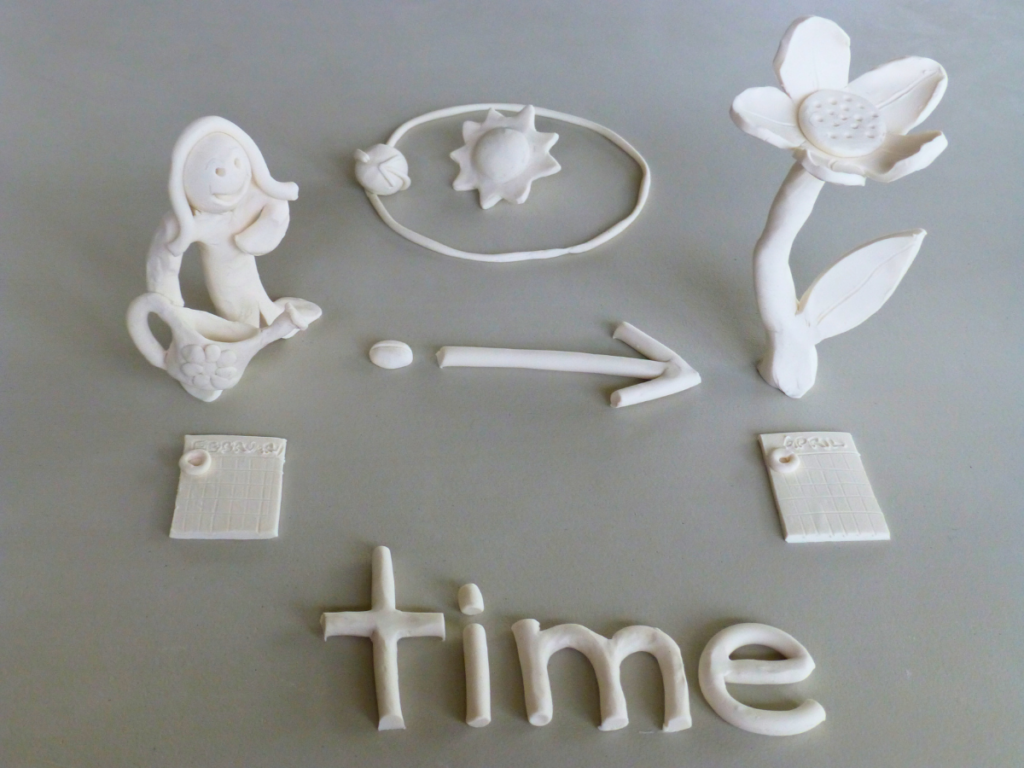
Why It Works for Dyslexic Adults
Most of us didn’t learn this stuff as kids. We just got told off for being late or unrealistic or “away with the fairies.”
But Davis doesn’t shame you. It shows you.
And here’s the kicker. Once you “get” time — not just as a word or number but as a functioning life tool — your whole life starts to shift.
• You stop overcommitting
• You stop underestimating
• You start finishing things you start
• You feel less guilty and more grounded
It doesn’t mean you suddenly become super rigid or perfectly punctual. I still work with my natural rhythms. But it gives you the structure to make real choices about how you spend your energy.
It’s Not Just About Productivity
Let’s be real. Time isn’t just about “getting stuff done.”
When you don’t understand time, you don’t understand rest either.
You might lie on the couch for three hours scrolling TikTok and then wonder why you still feel fried.
Understanding time helps you recover, not just schedule. It helps you regulate. It helps you get your needs met, especially if you’re juggling dyslexia, ADHD, anxiety, or the cocktail of neurodiverse companions many of us carry.
Time is not just a ticking clock. It’s a container for your life. And if that container is cracked or fuzzy or invisible… everything leaks.
What I’d Say to Facilitators Reading This
If you’re a Davis facilitator then thank you. Honestly. You’re doing the work most people don’t even realise is needed.
If you’re working with adults especially, don’t skip the concept of time. It can be a game-changer. It’s not just for people with time blindness. It’s for anyone who struggles to bring their internal visions into external reality.
Time is the bridge between the picture in your head and the life you want to live.
And the way Davis teaches it? It sticks. It lands. It lasts. 🙌
Want More?
Stephen Martin runs The Truth About Dyslexia, one of the top adult dyslexia podcasts in the world, with over 1 million downloads and counting.
If you’re looking for honest stories, neurodiverse hacks, and the kind of truth they never taught you in school, it’s worth a listen.
🎧 Listen here: Dyslexia Podcast
Or search The Truth About Dyslexia wherever you get your podcasts.
He’s also created a support space for dyslexic and ADHD adults called the Right Brain Reset. It’s a private community for people who want to make progress without burning out.
🧠 Learn more about ther Right Brain Reset Here
If you’re dyslexic and tired of doing it all alone, this might be the space you’ve been missing.
Want to know more about the Davis® Concepts for Life Program?
Find a Licensed Davis® Facilitator in your area or learn more about the program here. If you are unsure whether the Davis Concepts for Life program is right for you or someone you support, fill out the form below for a free Discovery Call – one of our team will speak with you about your specific needs.
Fout: Contact formulier niet gevonden.