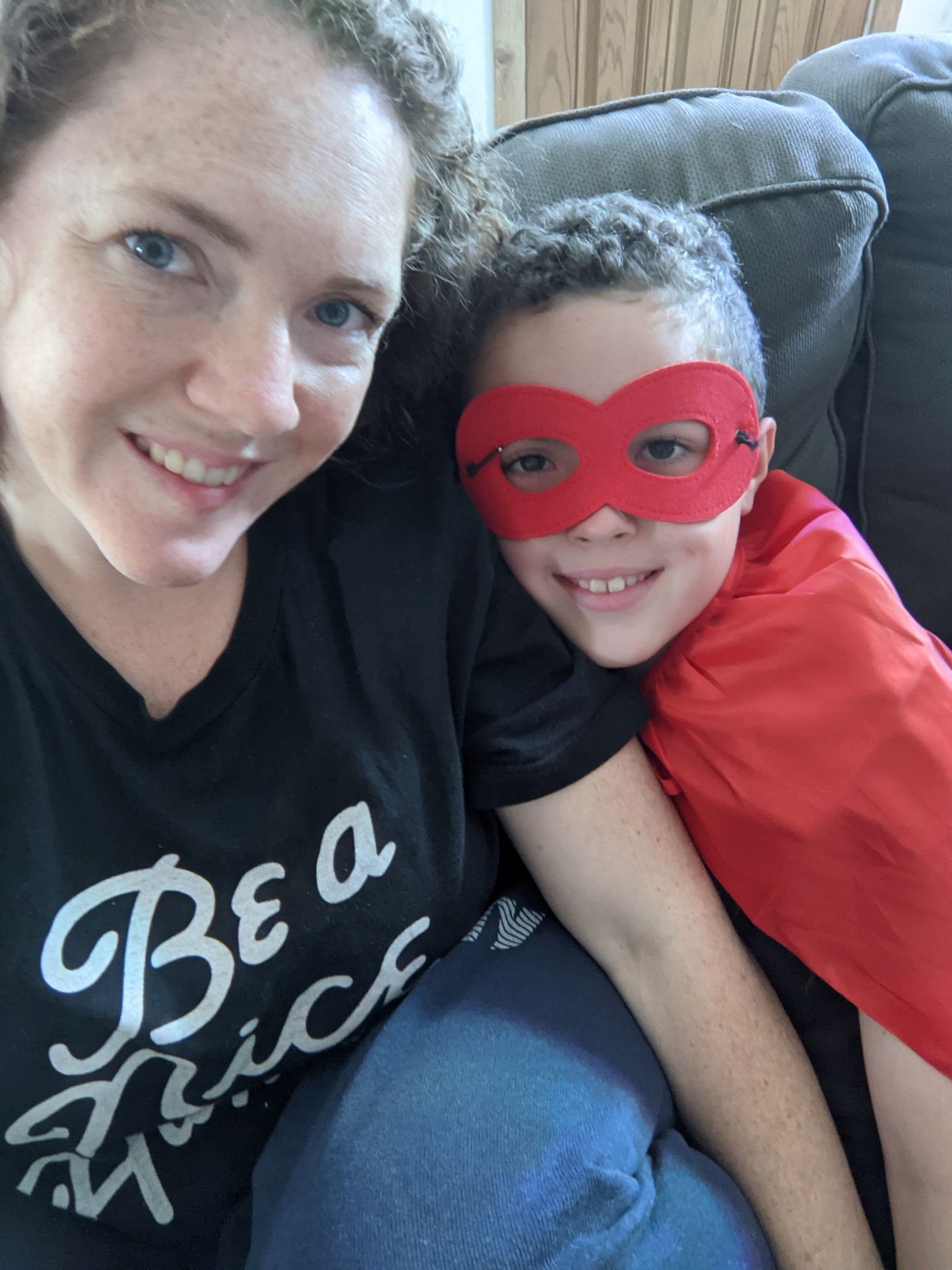
My story begins, as a lot of others do, when I was struggling to teach my second child to read. My first child was easy. She thrived in our homeschool classroom, but my second child was different. He was a mover, he loved (and still loves) taking things apart and figuring out how things worked. He was curious and brilliant. Classroom time was a mixed bag of emotions for him. Science was his favorite. Math was okay if I read the instructions, but there were tears anytime we tried to work on reading. It wasn’t that way at first, but by the time we started second grade he would have a full-on meltdown every time we worked on reading or writing or any language arts.
Everyone told me to just give it time and keep trying to make it fun. I tried everything to make reading and writing more fun and engaging. I wanted him to love reading like I do. We did letter tiles, to make word building more fun. He just wanted to stack the tiles into towers. We used sand trays to write letters and words in a more multisensory way. He did what I asked grudgingly, but he just wanted to feel the sand with his hands and play in it. We looked for books that he would be interested in, but he only wanted me to read to him. We tried writing words on cards and jumping from card to card as we read them. He just liked jumping. I tried apps and games on tablets. I tried so many things.
At the beginning of his second-grade year, he was still struggling to meet kindergarten standards. We were doing our pre-term testing through a public school homeschool program, and it took us many hours over several days to complete a test that should have taken an hour or two. There were many meltdowns, lots of bribes, and so much cajoling. My boy was suffering. I prayed my way through that test, and at one point I felt inspiration strike me. I thought, “What if this is dyslexia?” I asked the supervising instructor what he thought about it, and he couldn’t give me a straight answer. I jumped down the rabbit hole that is the internet, and I looked up all things dyslexia. I spent hours looking into it. I had no idea how shallow my understanding of dyslexia was. I had no idea how many people were affected by it, and I had no idea how bad it could be. I saw terrifying statistics about the percentage of prison inmates with dyslexia, and I read about people who said they learned how to read but never learned how to enjoy books. I mourned. I cried for days as I truly felt the loss of the possibility for my son to ever enjoy reading. It occurred to me that since literacy is the face of intelligence, some people might not ever truly see my brilliant boy. I was devastated and trying all the while to put on a good face so my son wouldn’t know how sad I was. My hope was hanging by a thread.
It was at that point that I began looking for dyslexia friendly solutions that could help him learn to read. I knew we needed to do things differently. Most of the language arts curriculums for kids with dyslexia are very heavily focused on phonics. We tried a few. The trouble was, my son hated it. He could not process the sounds of the letters well. Things weren’t sticking. One day I was teaching him that “a says /ah/” and the next we would try to learn that “a says /ay/” or one of the other phonemes associated with a. His confusion just worsened with every lesson. So did the meltdowns.
By his fourth-grade year I was nearly ready to give up. I was ready to give up hope that my son would ever read comfortably. That’s when I saw an advertisement from a Davis Facilitator. I don’t remember what the ad said, or what made me think to call her, but I did. I know I was desperate to find something, anything that would work. She did an assessment with my boy and told me how much it would cost. I wanted desperately to try, but I just couldn’t afford it at the time. This wonderful facilitator could tell my hope was fragile. She told me to just read the book, The Gift of Dyslexia by Ron Davis. She encouraged me to give the procedures in the book a try, and to call her when we were able. I devoured the book. The first time I read it through, I thought, “There’s no way I can do this with him. We just need to save up and pay for a program.” The second time I read it through, I thought, “I don’t know. Maybe.” The third time I read the book through, I was ready to try, but I was nervous I would do it all wrong. I bought the home kit, and I did what I could to prepare myself for this new venture. When I finally mustered up the courage to try the orientation procedures and build the Alphabet, my son was actually excited about it. He said it worked, and I could clearly see a difference. I began to hope again. It was January, and by May I had seen such an improvement that I knew we needed more.
For me, the next obvious step was to take the Gift of Dyslexia Workshop. I had made mistakes, but we still saw positive results. I just wanted to improve on our personal experience. Becoming a facilitator myself was not the plan at first, but I soon felt like I was being called to this work. I’m so glad that I have followed this path. The Davis Methods have absolutely helped me to become a better mother. My training as a facilitator gave me the tools I vitally needed to parent and homeschool my three neurodivergent children, and I am here to shout it from the rooftops. Davis really works, and everyone ought to know it!