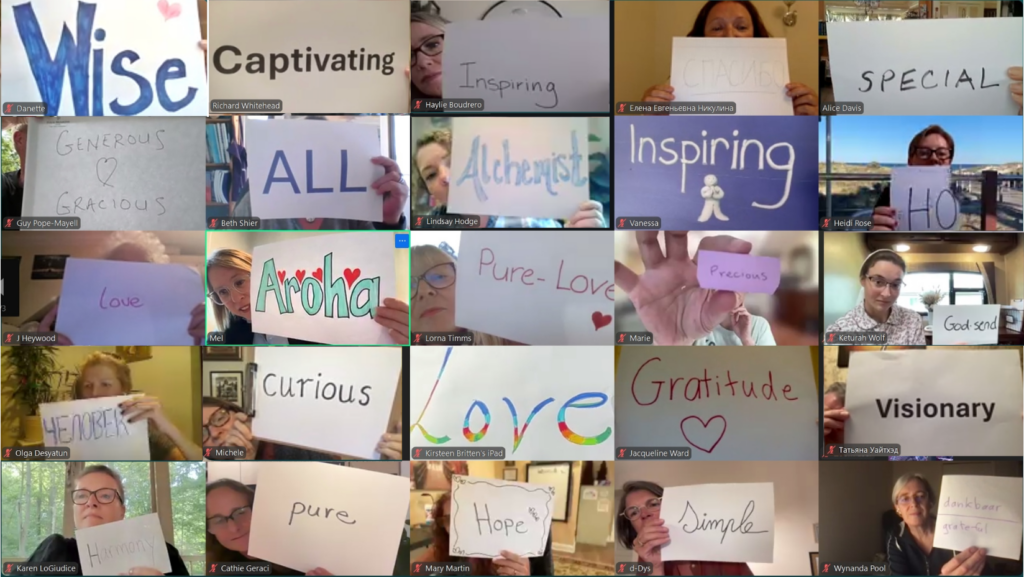
Ronald Dell Davis, pioneer in neurodivergent thinking, died on August 28, 2026, aged 84.
The Davis community are marking his life with memorial services being held around the world, in many different languages. Ron was autistic and dyslexic, he created the Davis Method to help others like him: neurodivergent individuals struggling in a neurotypical world. The Davis Method has helped over 80,000 families worldwide, is available in 20 languages and there are now over 300 Davis Facilitators around the world.
In the early years, Ron’s methods were criticized because they existed in a time before the word “neurodiversity” was coined (1998), before “neuro-affirming” was a concept and because he wasn’t an academic – what could someone that couldn’t speak until he was 12 or read or write until he was 38, possibly know about these things?
Luckily, some other pioneers joined him and now we now carry his work forward through a global network of Davis Facilitators, teaching Ron’s life work.
Ron was born in 1942 and labelled a Kanner’s baby (early term for autism coined by Doctor Leo Kanner).
Before age 12, Ron had very little verbal communication or memory. From Ron’s account of his early childhood, he has no recollection of his early years, he had no awareness of being alive and no connection to others or himself. From deep in the void of autism, something, somehow, woke him to the world.
In Ron’s autobiography, Dummy, he outlines how his brain works. There are no words or sentences inside his head. It’s colors, shapes, moving images. Imagine when people speak to you, you don’t hear the words, you see swirling colors and images. Ron could only understand the colors if they formed a picture of a concept he understood. If there was no picture for the words spoken to him, he couldn’t understand them.
“I’ve begun to see pictures for some of the sound colors. I still see just the formless colors for most of the sounds. But, for some of them, the colors form a picture. Maybe all the sound colors are pictures.”
— Ron Davis, Dummy
School was a particularly bad place for Ron. The colors, noise, lights, rules and unfamiliar language was scary and overwhelming. Learning in a classroom was impossible. The letter strip along the top of the wall in his classroom was a welcome distraction from the chaos – although it held no meaning whatsoever to him. He would stare at the interesting shapes that would float in the air, rotate, flip, and turn from his perspective. They were just amusing enough to cause some intrigue.
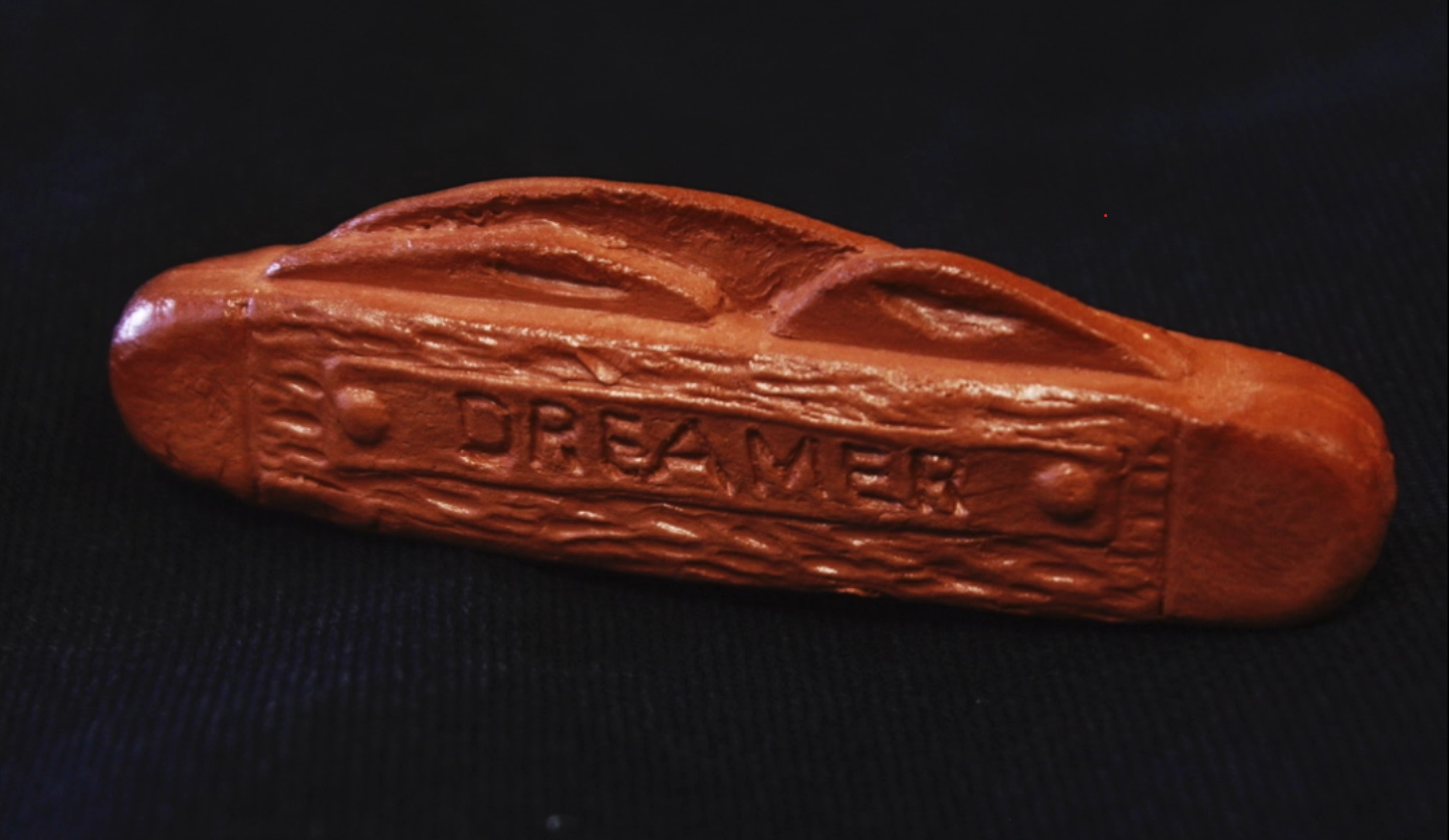
After school, Ron would play in his backyard, with his older brothers who would begrudgingly look out for him. They were allowed to have wristwatches and pocketknives. Ron, wanting to be “normal” like his brothers, would make his own by mixing red dirt and water to make clay.
Eventually Ron began to make the shapes he saw on the alphabet strip in the classroom out of clay. He would hold the shape in his imagination until he got home. He would ask his brothers “What’s? What’s?” in his limited communication ability. Slowly he began to build pictures in his mind of the letters of the alphabet. Little did he know, this was going to form the basis of his life’s work.
Thankfully, people saw through Ron’s limited verbal communication ability to see the intelligent person underneath. At 17 a teacher arranged for Ron to have his IQ tested in a special testing process designed for those with limited communication and reading.
The tests were grueling, taking place over a week.
Ron scored 137. Genius level.
They immediately got him into speech therapy and his verbal language rapidly expanded.
Learning to speak made words part of Ron’s universe. He voraciously used clay to understand concepts and words – each time building upon what he had already mastered. Between the ages of 17 and 27, he had created more than a thousand ideas and words in modeling clay. By the time he was 27, his IQ score had risen to 169!
These concepts were abstract ideas that many neurotypicals grasp at a young age, concepts like order, chaos, time and responsibility. These concepts became the foundation for two of the Davis Method’s most transformational programs, the Davis Autism Approach® and The Davis Concepts for Life programs®.
“What inspired me to help others with autism is that I am myself autistic. I know what it feels like, and I know the limitations that exist as a result of it. I realized that, given I had found my own way through this chaos (of autism), I could provide a ‘map’ for others of my kind to follow.”
Ron Davis
But reading was still a problem.
His doctors decided he must have a damaged brain. They said reading would never be possible for him.
Despite this, Ron excelled when he did hands-on training as an Optical Technician, then Electronics Technician, work that led him to create wiring schematics for the Space Race. Schematics and blueprints didn’t require him to read. A promotion into administration would. As soon as he heard he had the promotion, Ron quit before being exposed as illiterate.
Sculpting was still part of Ron’s life. He had continued it from his early days with clay in the backyard.
He eventually earned notoriety and financial achievement as a sculptor. During an interview Ron was asked “how, how, can you do what you do?” Ron couldn’t explain it in words. He could just innately bring his mental images to life with his hands.
As Ron contemplated his creative process, he realized he would get so lost in his sculpting, losing track of the world around him, just his hands and his thoughts working together to make creative imagery life-like. No language was necessary.
That was the penny drop moment. If he could go to a place where language didn’t exist, could he do the opposite? Find a place where it did exist?
Months later, at an artist’s convention, three other sculptors at his table said, one after another, that they couldn’t read. One used the word “dyslexia.” He knew there must be a connection somewhere.
Ron decided to use his engineering brain to find the solution. He had to reverse engineer his creative process to find the answer.
Ron locked himself in a hotel room for days to experiment. He discovered his dyslexia was caused by disorientation, a common occurrence that happens to everyone at times when you are overwhelmed by stimuli or thought, or when your brain receives conflicting information from the different senses and attempts to correlate the information. You would experience it if you stood up and spun around ten times.
Disorientation happens to a dyslexic brain when it looks at flat, two-dimensional symbols on a page. The powerful three-dimensional brain is trying to formulate mental pictures of entire concepts and ideas. A picture thinking brain doesn’t have an internal monologue that reads word by word. They are trying to visualize an idea by adding elements with each word encountered. Easy enough for words that have visual concepts, like “elephant,” “home,” or “school,” – not easy for words like “the,” “if,” or “in,” triggering disorientation.
Once he figured this out, he was able to read effortlessly for the first time in his life. He picked up Treasure Island, by Robert Louis Stevenson, the words held still, the spacing was accurate. He finished the book in one sitting and cried.
In 1982, Ron, together with his wife, Alice Davis, and Dr. Fatima Ali, established the Reading Research Council to further investigate what he had discovered. The successes were overwhelmingly positive. Word of mouth spread and soon hundreds of dyslexics were flooding to the doors of the Reading Research Council. The overwhelming demand gave Ron more momentum.
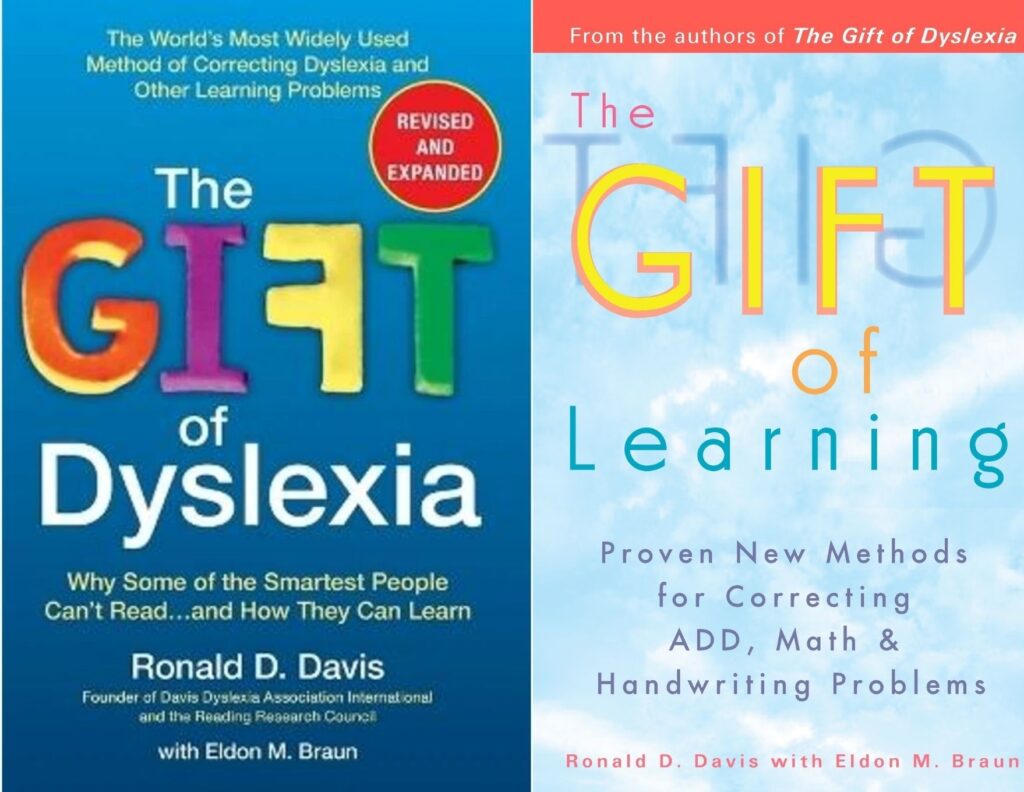
With the goal of reaching and helping as many dyslexic individuals as possible, Ron documented the entire process and published his best-selling book, The Gift of Dyslexia, in 1994 and established Davis Dyslexia Association International in 1995 (now Davis International) to train others in his methods.
Ron came to believe autism, ADHD, dyspraxia, dyscalculia and dyslexia share the underlying cause of disorientation, but different neurotypes experience it differently. For example, in dyslexia, it garbles a symbol on a page where in ADHD, it pulls attention into a vivid inner thought world. The mechanism is the same.
This led to the development of the subsequent programs (Davis® Mastery for Attention, Davis® Mastery for Math, Davis Concepts for Life®, Davis Autism Approach®, Davis® Stepping Stones, Davis® Reading for Young Learners, and Davis® Learning Strategies for schools) that have had equal success and have unlocked education for those who do not respond to mainstream teaching methods.
Word of mouth has continued to spread his work around the globe. His book is now translated into more than 20 languages, and has sold over a million copies. He later authored The Gift of Learning and his autobiography, Dummy, and co-authored Autism and the Seeds of Change with Abigail Marshall.
The Davis Method is the life work of a pioneer. Ron said dyslexia and autism were a different way of thinking, long before that was a mainstream view. Research is starting to catch up. A 2022 Cambridge study found dyslexic thinkers show real strengths in exploration and big-picture problem solving. Temple Grandin’s Visual Thinking argues picture-based thinkers are more common, and more capable, than schools and workplaces assume. Ron reached a similar conclusion decades earlier, from his lived experience. Yet he was labelled a kook and a snake oil salesman, due to his lack of academic credentials in the field.
Ron changed the story people told themselves about who they were and what they were capable of achieving.
If you would like to know more about any of the programs or workshops created by Ron, please contact us
“I identify as being Autistic, it explains every aspect of my life. My real work was and is to find a foundation for the new ones: for the babies born with some, or many, characteristics of the autism spectrum.”
Ron Davis, Dummy